
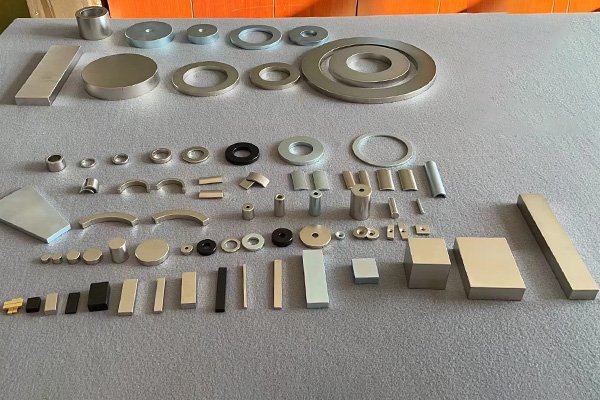
When you ask “what is the strongest magnet?”, you enter a fascinating world of invisible forces and cutting-edge science. This question has far-reaching implications across many fields.
Your role matters. Are you an engineer designing a high-performance motor? A researcher setting up a complex experiment? Or maybe a DIY enthusiast building a unique project? The magnet you choose can make or break your success.
This comprehensive guide gives you a direct answer and goes much deeper. We’ll explore how scientists measure magnet strength. We’ll compare the top contenders for the strongest magnet title. And we’ll provide a practical framework to help you select the perfect magnet for your specific needs.
This knowledge isn’t just academic—it’s practical and powerful. Understanding the strongest magnets opens doors to innovation, miniaturization, and technologies once thought impossible.
Table of Contents
The Strongest Permanent Magnet
Let’s cut to the chase. The strongest type of permanent magnet you can buy today is the Neodymium magnet.
These aren’t your typical refrigerator magnets. Neodymium magnets—technically called Neodymium-Iron-Boron or NdFeB magnets—belong to the rare-earth magnet family. They represent the peak of permanent magnet technology.
They set the benchmark for strength among all permanent magnets. A small neodymium magnet can lift over 1,000 times its own weight. This incredible power-to-weight ratio makes it stand out from all other magnetic materials.
Key characteristics of Neodymium magnets:
They have the highest Maximum Energy Product ((BH)max) of any permanent magnet. This value measures a magnet’s “power” or energy density.
They’re made primarily from Neodymium (Nd), a rare earth element, combined with Iron (Fe) and Boron (B). The exact composition and manufacturing process determine the final grade and strength.
You’ll often hear them called “super magnets,” “NIB magnets,” or simply “neo magnets.”
Their unmatched strength-to-size ratio has enabled major advances across countless industries. They allow for smaller, lighter, and more powerful devices.
If your project needs maximum magnetic force in the smallest possible package, a Neodymium magnet is almost always the clear choice. They’re the go-to option for applications demanding peak performance at room temperature.
Measuring Magnet Strength
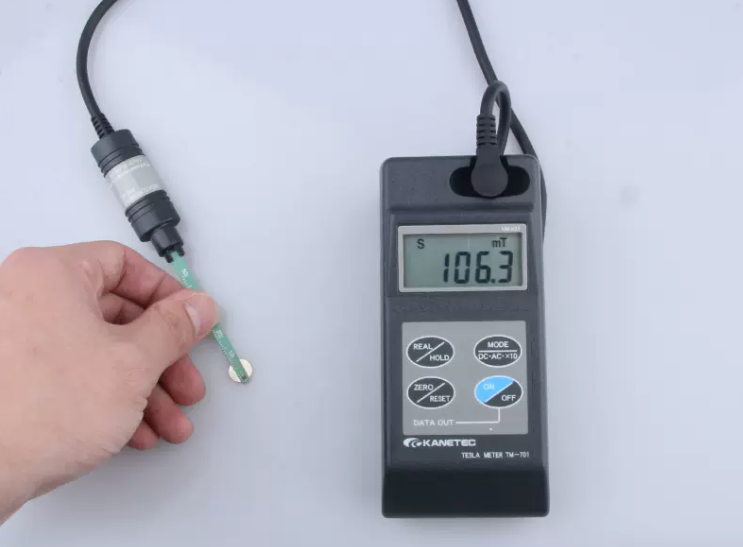
Understanding “strength” goes beyond simple pull force. For engineers and researchers, technical specifications truly define a magnet’s performance and suitability. Here’s a breakdown of the key metrics used to measure the power of the strongest magnets.
1. Magnetic Field Strength (Gauss & Tesla)
This is the most commonly cited metric. It measures the density of the magnetic field at a specific point in space. It tells you how concentrated the magnetic field lines are.
Tesla (T) is the standard SI unit of magnetic flux density. One Tesla represents a very strong field. Medical MRI machines typically operate between 1.5T and 3T to generate detailed images of the human body.
Gauss (G) is an older, smaller unit from the CGS system. The conversion is simple: 1 Tesla = 10,000 Gauss. A typical refrigerator magnet might be around 50 Gauss. A powerful Neodymium magnet can have a surface field of several thousand Gauss.
Think of magnetic flux density like water pressure. Gauss or Tesla tells you the pressure at one specific point, like right at a hose nozzle. But it doesn’t describe the total power or water flow of the entire system.
2. Remanence (Br)
Remanence, measured in Tesla or Gauss, represents the magnetic induction remaining in a magnetic material after removing the external magnetizing force.
Simply put, it’s the magnet’s ability to hold onto its magnetism. It’s the fundamental “memory” of the magnetic field imprinted on the material.
A higher Br value means a stronger residual magnetic field. This is a core component that contributes to the overall strength of a magnet.
3. Coercivity (Hc)
Coercivity measures a magnet’s resistance to being demagnetized by an external magnetic field or heat. It measures the material’s durability against opposing forces.
This is critical for applications in high-temperature environments or where the magnet faces opposing magnetic fields, such as in electric motors and generators.
A magnet with high coercivity maintains its strength even under harsh operating conditions. This makes it more reliable for demanding industrial uses. There are two types: intrinsic coercivity (Hci) and normal coercivity (Hcb), with Hci being particularly important for temperature stability.
4. Maximum Energy Product ((BH)max)
This is the single most important indicator of a permanent magnet’s strength. It’s measured in MegaGauss-Oersteds (MGOe).
(BH)max represents the maximum amount of magnetic energy stored within the magnet. It’s calculated from the demagnetization curve (the B-H curve) of the material. It corresponds to the area of the largest rectangle that can be inscribed in the second quadrant of that curve.
The higher the (BH)max, the greater the potential force the magnet can exert. When we talk about the strongest magnet, we typically refer to the one with the highest (BH)max value. It’s the ultimate figure of merit for comparing the power of different permanent magnet materials.
Metric | What It Measures | Analogy / Simple Explanation | Why It Matters for “Strength” |
Tesla / Gauss | Magnetic flux density at a point | The water pressure at the nozzle | Indicates field intensity at the surface |
Remanence (Br) | How much magnetism it “remembers” | The amount of water stored in the tank | Higher Br contributes to a stronger field |
Coercivity (Hc) | Resistance to demagnetization | The tank’s resistance to leaks | Essential for durability in tough conditions |
(BH)max | Total stored magnetic energy | The total power output of the water system | The ultimate measure of a magnet’s power |
Comparing Strong Magnets
While Neodymium magnets are the strongest, they’re not always the best choice for every situation. Other powerful magnets offer distinct advantages in specific scenarios. This is particularly true regarding operating temperature, corrosion resistance, and overall cost.
Here’s how the main types of strong magnets stack up against each other.
Magnet Type | (BH)max (Strength) | Max Operating Temp. | Corrosion Resistance | Relative Cost | Best For… |
Neodymium (NdFeB) | 35-55 MGOe (Highest) | 80°C – 230°C | Poor (Requires Coating) | Medium-High | Maximum strength in a small size; motors, sensors, consumer electronics. |
Samarium Cobalt (SmCo) | 18-32 MGOe (High) | 250°C – 350°C (Highest) | Excellent | High | High-temperature and corrosive environments; military, aerospace, medical. |
Alnico (Al-Ni-Co) | 5-9 MGOe (Medium) | 450°C – 550°C (Very High) | Good | High | Extreme temperature stability; sensors, guitar pickups, aerospace. |
Ceramic (Ferrite) | 3-5 MGOe (Low) | 250°C – 300°C | Excellent | Low (Lowest) | Cost-sensitive applications where high strength is not critical; refrigerator magnets, small motors. |
Deep Dive into Magnet Types
Neodymium (NdFeB) is the undisputed champion of strength. For any room-temperature application where you need the most magnetic force possible in a given volume, NdFeB is the go-to choice.
Its main weaknesses are relatively low maximum operating temperature and poor corrosion resistance. This is why nearly all Neodymium magnets you see are coated.
They typically have a layer of Nickel-Copper-Nickel (Ni-Cu-Ni) to protect the raw material from moisture and oxidation. Different grades, like N42 or N52, offer varying levels of strength, with N52 being among the strongest commercially available.
Samarium Cobalt (SmCo) magnets are the second strongest type of rare earth magnets. Their primary advantage is exceptional performance at high temperatures and superior corrosion resistance without needing a coating.
This makes them indispensable in demanding applications like military hardware, down-hole drilling sensors, and high-performance racing motors. These are places where NdFeB magnets would quickly fail due to heat-induced demagnetization. There are two main series of Samarium Cobalt magnets: SmCo5 and Sm2Co17, with the latter offering higher temperature ratings.
Alnico is an alloy of Aluminum, Nickel, and Cobalt. It’s a veteran in the magnet world. While not as strong as rare-earth magnets, Alnico offers the best temperature stability of any common magnet. It’s usable in some cases up to an incredible 550°C (1022°F).
They’re also less brittle than Neodymium or SmCo magnets. Their ability to function reliably in extreme heat makes them essential for specialized sensors, aerospace applications, and classic electric guitar pickups where their unique magnetic properties contribute to a desired tone.
Ceramic magnets, also known as Ferrite magnets, are by far the most common magnet by volume due to their extremely low cost. They’re not nearly as strong as Neodymium, but their excellent resistance to corrosion and demagnetization makes them reliable and economical. You find them everywhere. From everyday refrigerator magnets and children’s toys to small DC motors and loudspeaker systems where their cost-effectiveness outweighs the need for extreme magnetic force.
Choosing Your Magnet
Knowing the data is one thing. Applying it is another. The “best” magnet depends entirely on the job it needs to do. Based on our experience working with thousands of clients across various industries, here’s a practical guide tailored to your specific needs.
For Industrial Engineers
Your primary concerns are performance, reliability, and efficiency under specific operating conditions. The choice of magnet directly impacts the final product’s size, weight, power, and cost.
If you’re designing a compact brushless DC motor, servo motor, or miniature sensor, the high (BH)max of Neodymium magnets allows you to achieve high torque and sensitivity in a smaller footprint. This is the core principle behind the miniaturization of many modern electronics and machines. The question of how strong is a neodymium magnet is answered by its ability to create powerful fields in tight spaces.
For applications inside an engine bay, industrial furnace, or down-hole drilling tool, a standard Neodymium magnet will likely demagnetize permanently. Here, Samarium Cobalt (SmCo) is the superior choice. It maintains its strength at temperatures where NdFeB fails. This ensures operational reliability in thermally challenging environments.
For a high-volume product where cost is paramount and extreme strength isn’t the main driver, Ceramic (Ferrite) magnets are often the most economical solution. In arc shapes, they’re the backbone of countless simple DC motors used in automotive and appliance applications. Their low cost makes mass production feasible.
A common challenge we see is engineers underestimating the cumulative impact of heat. Always check the maximum operating temperature of the specific magnet grade, not just the general magnet type. A custom-engineered magnetic assembly can often shield the magnet and optimize the magnetic circuit. This improves thermal management and overall performance.
For Researchers and Educators
Your focus is on precision, field properties, and demonstrating scientific principles clearly.
For experiments requiring a strong, uniform magnetic field, such as in a Halbach array, particle focusing beamline, or magnetic resonance research, high-grade Neodymium magnets (N52, N55) are essential. Their high energy density allows for the creation of powerful fields without the need for cryogenic electromagnets in some setups.
A set of Alnico magnets is excellent for demonstrating temperature effects, specifically the Curie point, where a material loses its permanent magnetic properties. A comparison set of Neodymium, Ceramic, and Alnico magnets of the same size provides a powerful, tangible lesson in magnetic strength and energy product. It allows students to feel the difference directly.
For DIY Enthusiasts and Makers
You need reliable holding power, versatility, and safety for your creative projects.
For projects like magnetic knife holders, hidden cabinet latches, workshop jigs, or magnetic retrieval tools, N42 or N52 grade Neodymium discs or blocks are perfect. Their immense pull force relative to their small size provides a clean, strong, and often invisible solution.
The project type matters. Countersunk ring magnets are ideal for screwing into place for secure, permanent mounting on wood or plastic. Adhesive-backed magnets offer convenience for light-duty applications on non-metallic surfaces, such as mounting posters or organizing small tools.
Safety must be the top priority. For any project involving multiple strong magnets, be acutely aware of the intense pinching force. Always purchase from a reputable supplier who provides accurate pull force data and clear safety warnings to prevent injury.
Real-World Magnet Applications
The strongest magnets aren’t just a scientific curiosity. They’re a hidden force driving modern technology. They’re integral components in devices we use every day and in large-scale industrial processes. Here are just a few examples of how they’re used.
Advanced Medicine is a key area. The incredibly powerful and stable magnetic fields required for Magnetic Resonance Imaging (MRI) machines are typically generated by superconducting electromagnets. However, permanent Neodymium magnets are used in smaller, open MRI systems, peripheral limb scanners, and various other medical devices and sensors due to their field strength and compactness. For a deeper look at how this technology works, the National Institute of Biomedical Imaging and Bioengineering provides an excellent overview.
Renewable Energy relies heavily on them. Massive direct-drive wind turbines use large generators to convert rotational energy into electricity. These generators often use arrays of powerful Neodymium magnets to create a strong magnetic field efficiently. This maximizes power output and reduces the need for a complex, maintenance-heavy gearbox.
Electric Vehicles (EVs) and high-performance motors are another major application. The high-efficiency permanent magnet synchronous motors that power most EVs use precisely arranged Neodymium magnets. These industrial magnets generate the high torque needed for rapid acceleration and sustained speed. All while keeping the motor’s weight and size to a minimum, which is critical for vehicle range.
Consumer Electronics are filled with them. That thin laptop, those high-fidelity headphones, and the haptic feedback engine in your smartphone all rely on tiny but powerful Neodymium magnets to function. They’re used in hard disk drive actuators to position the read/write head with incredible speed and precision. They’re in miniature speakers to create sound, and in countless sensor systems.
Industrial Separation processes use powerful magnet applications. In mining, food processing, and recycling, powerful magnetic separator bars and plates—often using rows of Neodymium magnets—pull ferrous metal contaminants out of production lines. This ensures product purity, protects consumers, and prevents damage to downstream processing equipment.
Crucial Safety Guide

With great power comes great responsibility. The strongest magnets, particularly large Neodymium magnets, are not toys and must be handled with extreme care. Ignoring these warnings can lead to serious injury or significant property damage.
From our experience, the most underestimated danger is the closing speed. Two strong magnets can accelerate toward each other with surprising and uncontrollable force from a considerable distance. This gives you no time to react. This rapid closure is where most injuries occur.
Key Safety Warnings
A severe pinching hazard exists. Large magnets can slam together with enough force to crush, break, or even sever fingers. Always keep them a safe distance apart. Wear safety gloves and eye protection when handling any powerful magnet.
There’s a significant danger to electronics and medical devices. Keep strong magnets far away from pacemakers and other implanted medical devices. This is a critical, life-threatening risk, as the magnetic field can interfere with the device’s operation.
They can also affect credit cards, cell phones, computer monitors, and hard drives. The strong magnetic field can permanently damage the magnetic strips on cards or erase data on digital media.
Neodymium magnets are hard but very brittle, like a piece of ceramic. If allowed to collide, they can shatter violently and send sharp, fast-moving splinters flying. Never allow two strong magnets to slam together.
There are also demagnetization risks. Exposing Neodymium magnets to temperatures above their maximum operating point (which can be as low as 80°C / 176°F for standard grades) will cause them to permanently lose a portion of their magnetism. Extreme heat will erase them completely.
For a comprehensive overview of magnet safety, always refer to the guidelines provided by your supplier. If you’re ever unsure about handling procedures, please contact our experts before proceeding.
The Future of Magnets
While Neodymium magnets reign supreme among commercially available permanent magnets, the quest for the strongest magnet in the world continues in laboratories around the globe. The drive is for materials that are even stronger, cheaper, and less reliant on rare-earth elements.
Electromagnets and Superconductors
It’s important to distinguish between permanent magnets and electromagnets. The strongest magnetic fields ever created by humans come from electromagnets. These generate a field only when an electric current flows through a coil of wire.
Resistive electromagnets can generate continuous, steady-state fields up to approximately 45 Tesla. But they require immense electrical power and sophisticated water-cooling systems to dissipate the enormous heat generated.
Superconducting magnets are used in MRI machines and particle accelerators like the Large Hadron Collider at CERN. Once cooled to cryogenic temperatures, they can create powerful, stable fields with no electrical resistance. This makes them highly efficient for long-duration operation.
Pulsed magnets can achieve even higher fields. Facilities like the National High Magnetic Field Laboratory can generate non-destructive pulsed fields over 100 Tesla for fractions of a second. These intense, brief pulses allow scientists to study the properties of materials under extreme conditions.
Next-Generation Permanent Magnets
Researchers are actively exploring materials that could one day dethrone Neodymium magnets. The primary goals are to increase the energy product ((BH)max) and reduce or eliminate the use of critical rare-earth elements like Neodymium and Dysprosium.
One of the most promising candidates is Iron-Nitride (Fe₁₆N₂). It has a theoretical (BH)max more than double that of the best Neodymium magnets. However, producing this material in a stable, bulk form that retains its superior magnetic properties remains a significant scientific and engineering challenge.
Success in this area, or with other materials like high-entropy alloys, could revolutionize electric motors, power generation, and data storage all over again. This would usher in a new era of magnetic technology.
Conclusion
We’ve answered the question of what is the strongest magnet—the powerful Neodymium (NdFeB) magnet. But more importantly, we’ve shown that “strongest” isn’t always “best.” The optimal choice is a nuanced decision.
The right choice depends on a careful balance of factors specific to your application:
Strength ((BH)max) is the primary consideration for power and miniaturization, where Neodymium is the clear winner.
Temperature Resistance is critical in harsh environments, where Samarium Cobalt and Alnico excel and Neodymium fails.
Environment and corrosion are key factors, where the natural resistance of SmCo and Ceramic magnets offers a significant advantage.
Cost is often a driving factor in high-volume production, making Ceramic magnets the most economical solution for less demanding applications.
By understanding these trade-offs, you can move from simply seeking the strongest to strategically selecting the smartest magnetic solution for your project. You’re now equipped with the expert knowledge to innovate, build, and solve problems with the incredible, invisible force of magnetism.
Ready to find the perfect high-performance magnet for your project? Browse our extensive selection of Neodymium Magnets or contact our team of experts for a custom consultation.
We are a manufacturer specializing in the research and development of magnets with years of industry experience. Our product offerings include NdFeB magnets, ferrite magnets, and custom magnetic components. Our goal is to provide high-quality magnetic solutions to customers worldwide, and we also offer OEM/ODM customization services. If you have any questions about magnets or custom applications, please feel free to contact our team of experts.
Facebook
LinkedIn
WhatsApp
Twitter