
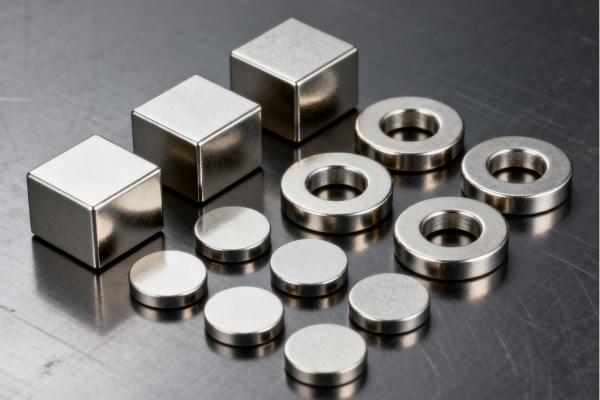
A rare earth magnet is a super-strong permanent magnet. It’s made from special metal mixtures that include rare-earth elements. Don’t let the name fool you – these elements aren’t actually rare in nature, but they create incredibly powerful magnets.
There are two main types you should know about. Neodymium (NdFeB) magnets are the strongest you can buy commercially. Samarium-Cobalt (SmCo) magnets are known for handling high temperatures and resisting corrosion. Understanding what is a rare earth magnet and how to choose the right one is essential for engineers, buyers, and innovators in many industries.
This guide will explain these powerful components clearly. We’ll start with the basic science and move to practical tips for choosing the right magnet for your project.
Table of Contents
The Science Behind the Superpower
The incredible strength of rare earth magnets isn’t magic. It comes from a special combination of atomic properties and tiny crystal structures.
Their exceptional magnetic force comes from two key factors:
- High Magnetic Anisotropy. Think of this as the magnet’s “built-in preference.” The atoms inside a rare earth magnet’s crystal structure are arranged so that all their tiny magnetic forces point in the same direction. In regular magnets like ferrite, these forces aren’t lined up as well. This creates a weaker overall magnetic field.
This strict alignment gives rare earth magnets their high coercivity – their ability to resist losing their magnetism. - Special Electron Structure. Rare-earth elements like Neodymium and Samarium have electrons arranged in a unique way in their outer shells.
These unpaired electrons spin in the same direction. This creates powerful tiny magnetic moments. When these atoms combine with metals like iron (which also has strong magnetic properties) in a specific crystal structure, their individual magnetic forces work together. The result is an incredibly powerful magnetic field that you can see and feel.
Basically, rare earth magnets are designed at the atomic level to be perfect magnetic soldiers. They all point in the same direction and work as a team.
This is why a small neodymium magnet can be many times stronger than a much larger ceramic or alnico magnet.
This is why a small neodymium magnet can be many times stronger than a much larger ceramic or alnico magnet.
This atomic-level design sets them apart from traditional magnets. The crystal structure isn’t just random atoms thrown together. It’s a highly organized framework that provides one clear direction for magnetization.
When manufacturers apply an external magnetic field during production, the atomic moments lock into this unified direction.
When manufacturers apply an external magnetic field during production, the atomic moments lock into this unified direction.
For more detailed physics explanations, check out the educational resources from institutions like the University of Illinois Urbana-Champaign’s Physics Department. They provide excellent academic-level explanations.
NdFeB vs. SmCo
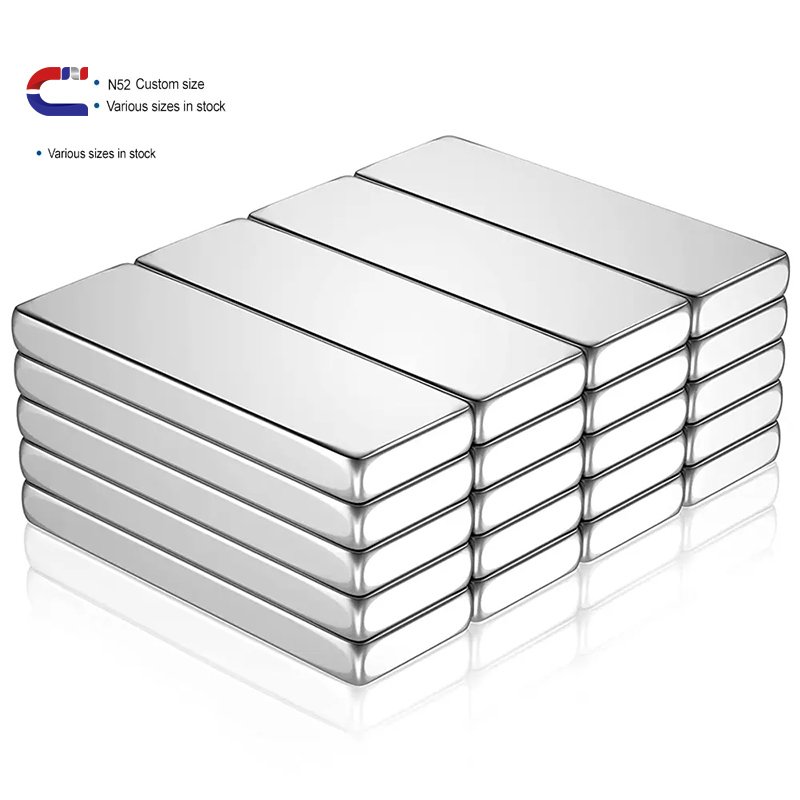
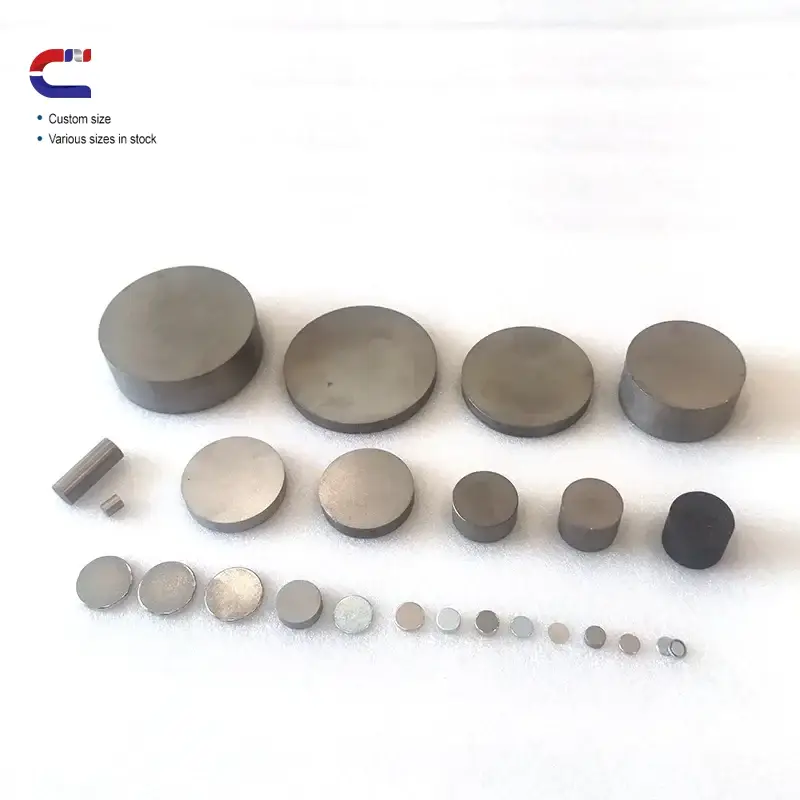
Both types fall under the “rare earth” category, but Neodymium (NdFeB) and Samarium-Cobalt (SmCo) magnets aren’t interchangeable. They have different strengths suited to different jobs.
Choosing between them is one of the most important decisions in magnetic design. The choice depends on balancing maximum power, operating temperature, and environmental conditions.
1. Neodymium Magnets
These magnets contain Neodymium, Iron, and Boron. NdFeB magnets are the workhorses of the modern world. They offer the highest magnetic energy of any permanent magnet material.
This means they provide the most magnetic force for their size. They’re perfect for applications where you need small size and maximum power. Think high-performance electric motors, consumer electronics, and compact sensors.
However, standard NdFeB magnets have limitations. They can’t handle as much heat and they rust easily. The high iron content makes them prone to corrosion. They almost always need protective coatings to last long.
2. Samarium-Cobalt Magnets
SmCo magnets were the first successful rare earth magnets developed. They’re made from Samarium and Cobalt. They came before NdFeB magnets and are still critically important today.
While not as magnetically strong as NdFeB magnets, they have key advantages. They handle high temperatures much better and resist corrosion excellently. They can work at much higher temperatures without losing their magnetic properties.
They often don’t need a coating at all. This makes them essential for harsh environments in aerospace, military equipment, and deep drilling operations.
Here’s a side-by-side comparison to help you choose:
Feature | Neodymium (NdFeB) Magnets | Samarium-Cobalt (SmCo) Magnets |
Magnetic Strength (BH)max | Highest (up to 55 MGOe) | High (up to 32 MGOe) |
Max. Operating Temperature | Lower (80°C to 230°C) | Much Higher (250°C to 350°C) |
Corrosion Resistance | Poor (Requires coating) | Excellent (Usually no coating needed) |
Cost | Generally lower | Generally higher |
Brittleness | Very brittle, can chip easily | Brittle, but slightly less so than NdFeB |
Common Applications | Motors, sensors, hard drives, audio equipment, magnetic separators, consumer electronics. | Military/aerospace, medical devices, high-temp motors, down-hole drilling sensors. |
This comparison shows the basic trade-off clearly. NdFeB gives you peak power. SmCo provides reliability in extreme heat and harsh environments. Your specific needs will determine which material works better for you.
A Practical Selection Guide
Understanding the difference between NdFeB and SmCo is just the first step. Next, you need to dive into the detailed specifications.
Selecting the right magnet means balancing four key factors. These are Magnetic Grade, Temperature Resistance, Corrosion & Coating, and Application-Specific Needs. Getting this balance right leads to successful and cost-effective design.
1. Understanding Magnetic Grades
The “N” number in an NdFeB magnet (like N42 or N52) shows its Maximum Energy Product. This is measured in MegaGauss Oersteds (MGOe). This number tells you how strong the magnet is.
- A higher number means a stronger magnet. An N52 magnet is much stronger than an N35 magnet of the same size and shape. This lets you make things smaller or boost performance.
- There’s a trade-off between cost and power. Higher grades contain more rare earth elements and need more precise manufacturing. This makes them more expensive. For many uses, a mid-range grade like N42 or N45 provides plenty of force. It’s also more cost-effective than top-tier N52.
- Samarium Cobalt magnets use similar grading. You’ll see grades like SmCo 18 or SmCo 26. The number also shows the energy product in MGOe.
Here’s a good rule of thumb: don’t over-specify. Start your testing with a mid-range grade like N42. Only move to a higher, more expensive grade if testing proves you absolutely need more magnetic force for your application to work properly.
2. Matching Magnet to Temperature
This is where many design mistakes happen. A magnet’s performance depends heavily on its operating temperature. A letter after the grade (like N42M) shows its maximum operating temperature.
- Standard (No Letter): Up to 80°C (176°F)
- M Grade: Up to 100°C (212°F)
- H Grade: Up to 120°C (248°F)
- SH Grade: Up to 150°C (302°F)
- UH Grade: Up to 180°C (356°F)
- EH Grade: Up to 200°C (392°F)
- AH Grade: Up to 230°C (446°F)
Here’s something crucial: if your application will regularly exceed 250°C, you must switch to a SmCo magnet. Exposing a magnet to temperatures above its rating will cause permanent damage. It will lose its magnetism forever and become permanently weaker.
Professional organizations like the International Electrotechnical Commission (IEC) publish standards such as IEC 60404-8-1 that classify magnetic materials. These standards help engineers ensure material compliance and performance.
3. Fighting the Elements
NdFeB magnets are mostly iron, so they rust quickly and badly if left unprotected. A coating isn’t optional – it’s an essential part of the component.
- Nickel-Copper-Nickel (Ni-Cu-Ni) is the most common and affordable coating. It gives a durable, silver-like finish that works well for most indoor or dry applications.
- Epoxy (Black) offers excellent protection against corrosion and chemicals. This makes it good for humid, outdoor, or marine environments. It also provides some impact protection because of its slightly softer surface.
- Zinc (Zn) provides a sacrificial layer, but it’s thinner and less durable than standard Ni-Cu-Ni coating. People often choose it for its low cost.
- Parylene is a high-performance polymer coating used for medical applications. Its main benefit is biocompatibility and its ability to form a completely uniform, pinhole-free layer.
- Gold (Au) is often plated over a Ni-Cu-Ni base layer. It’s used for medical, scientific, and decorative applications where biocompatibility and extreme chemical resistance are required.
SmCo magnets resist oxidation and corrosion naturally. They typically don’t need a coating. This simplifies design and eliminates a potential failure point in critical systems, especially where a coating could chip or flake off.
4. Industry-Specific Choices
From our experience working with hundreds of clients, here’s how different industries typically choose their magnets when deciding what is a rare earth magnet and how to choose the right one.
- Automotive & EV Motor Engineers typically use high-grade, high-temperature NdFeB (like N48SH or N45UH) for traction motors. This maximizes power density and efficiency, which are critical for vehicle range and performance. SmCo is often used for sensors in high-heat areas like near the exhaust, transmission, or braking systems, where temperatures exceed NdFeB limits.
- Industrial Automation & Robotics Buyers find that standard N-grade NdFeB magnets (N35 to N45) work perfectly. They use them in actuators, holding systems, and robotic grippers where operating temperatures are stable and cost matters most. The high strength-to-size ratio allows for compact and powerful automation parts.
- Medical Device Developers need biocompatible coatings on NdFeB (like Parylene or Gold) for devices that may contact patients directly or indirectly. SmCo is often chosen for sterilizable equipment, such as tools used in autoclaves, because it can handle the high temperatures of sterilization without degrading.
- DIY Enthusiasts & Makers find that standard, Ni-Cu-Ni coated N42 or N52 grade NdFeB magnets offer the most “bang for your buck.” Their incredible holding force is perfect for workshop jigs, fixtures, creative projects, and magnetic closures.
If your project needs a specific shape, grade, or coating not available off-the-shelf, exploring custom magnet solutions is the best way forward. This ensures optimal performance and a perfect fit for your design.
From Powder to Power
Creating a high-performance rare earth magnet is a sophisticated process. It’s much more complex than simply melting and casting metal. The most common method for producing high-strength magnets is called sintering.
This process ensures the precise crystal alignment needed for maximum magnetic strength.
- First, the raw materials (like Neodymium, Iron, Boron) are melted together in a vacuum furnace. The vacuum prevents oxidation and contamination. This ensures the purity of the resulting alloy.
- The cooled alloy is extremely brittle. It’s then crushed and ground into very fine powder. Each tiny particle of this powder is essentially a small single crystal.
- The powder goes into a mold and gets pressed into a “green” block. At the same time, it’s exposed to a powerful external magnetic field. This crucial step aligns all the powder particles in the same magnetic direction. It sets the final direction of magnetization.
- The green block then gets sintered. It’s heated in a vacuum furnace to a temperature just below its melting point. This fuses the individual particles together into a solid, dense block. It permanently locks in the magnetic alignment from the pressing stage.
- The sintered block is extremely hard and brittle, like ceramic. It’s cut and ground to precise final dimensions using diamond-coated grinding wheels and wire-cutting machines.
- For NdFeB magnets, the finished part gets thoroughly cleaned and then coated. This multi-layer plating process, often with Ni-Cu-Ni, protects it from corrosion.
- Finally, the finished, coated part goes inside a large magnetizing coil. A massive pulse of electricity flows through the coil. This creates an intense magnetic field that fully magnetizes the part along its pre-aligned direction.
This multi-stage process is closely followed by industry publications like Magnetics Magazine. It’s why rare earth magnets are considered precision-engineered components, not simple cast materials.
Debunking Common Myths
Wrong information about rare earth magnets can lead to project failures, budget problems, and even safety hazards. Let’s clear up some of the most common myths.
Myth 1: They are made from rare materials.
Fact: The name is misleading. Neodymium, the main rare earth element in the most common type of these magnets, is more common in Earth’s crust than lead, tin, or silver. The term “rare earth” refers to a group of 17 elements on the periodic table. They were historically difficult to separate from their ores and from each other. It doesn’t refer to their actual scarcity in nature. The U.S. Geological Survey (USGS) provides extensive data on global production and reserves of these elements.
Myth 2: The strongest grade is always best.
Fact: “Strongest” doesn’t equal “best.” As we’ve discussed, temperature rating is often more critical. A standard N52 magnet will permanently lose its magnetism at much lower temperatures than a high-temperature N35SH magnet. Also, extreme strength can be dangerous. It can create serious handling hazards for workers and may require stronger structural support in the final assembly. This increases cost and complexity. The best choice is the magnet that meets all your requirements – temperature, force, and cost – most efficiently.
Myth 3: All rare earth magnets are destroyed by heat.
Fact: This is only true for standard-grade NdFeB magnets operating above 80°C. High-temperature grades of NdFeB are specially made with elements like Dysprosium and Terbium. They work effectively at temperatures up to 230°C (446°F). Beyond that, Samarium-Cobalt (SmCo) magnets are specifically designed for high-heat applications. They function perfectly at 300°C (572°F) or even higher depending on the specific grade.
Myth 4: A thicker coating makes a magnet more durable.
Fact: A coating’s main job is preventing corrosion, not providing structural strength. Rare earth magnets are naturally brittle materials, much like ceramics. While a softer coating like black epoxy might offer minimal cushioning against minor impacts, no standard coating will prevent a magnet from chipping or breaking if dropped on a hard surface. It also won’t help if magnets snap violently into each other or steel plates. The magnet’s mechanical durability comes from the sintered material itself. Its magnetic strength depends on the material grade, not the coating.
Empowering Your Next Project
We’ve explored what is a rare earth magnet and how to choose the right one. We’ve moved from the atomic level to real-world applications. The key is remembering the core trade-offs.
- Neodymium (NdFeB): Unmatched power for its size. Ideal for most applications below 150°C where maximum force is the goal.
- Samarium-Cobalt (SmCo): The champion of high-temperature and harsh environments. Provides reliability where NdFeB cannot.
By carefully considering your required magnetic force (grade), operating temperature (letter code), and environmental conditions (coating), you can select a magnet that’s perfectly suited to your design. It won’t just be powerful – it will be reliable, cost-effective, and perform optimally in your final product.
Whether you’re sourcing for large-scale industrial production or prototyping a groundbreaking new device, the right magnetic partner is key. We invite you to explore our extensive range of stock rare earth magnets. Learn about our capabilities in crafting custom magnet solutions for unique challenges. Or browse our technical blog for even deeper insights into magnetic technology.
We are a manufacturer specializing in the research and development of magnets with years of industry experience. Our product offerings include NdFeB magnets, ferrite magnets, and custom magnetic components. Our goal is to provide high-quality magnetic solutions to customers worldwide, and we also offer OEM/ODM customization services. If you have any questions about magnets or custom applications, please feel free to contact our team of experts.
Facebook
Twitter
LinkedIn
WhatsApp