
That small, shiny magnet that just vanished into your child’s mouth isn’t just another swallowed object. It’s a potential medical crisis waiting to happen. As magnet technology and safety experts, we know the instant panic this creates for parents.
So, what happens if you swallow magnets? The answer depends on how many magnets were swallowed, what type they are, and their size. One magnet might cause minor problems. But two or more magnets? That’s when things become deadly serious.
The danger is straightforward but terrifying. Magnets naturally pull toward each other. When someone swallows multiple magnets, they can attract across different parts of the intestines or stomach walls.
This powerful force can pinch tissues together. It traps them. It cuts off blood flow to delicate parts of the digestive system. The result? Severe internal injuries that need emergency surgery.
This guide breaks down these risks in clear, simple terms. You’ll learn what symptoms to watch for. You’ll know exactly what to do in an emergency. And you’ll discover how to prevent these accidents from happening. Knowledge is your best defense against this hidden danger.
One vs. Multiple Magnets
The level of danger changes completely based on what was swallowed. This difference is crucial for understanding the situation and knowing how to respond. It’s the key to making the right choice when every second counts.
A Single, Small Magnet
When a child swallows just one small magnet, the risk is usually low to moderate. Most of the time, the magnet is small and smooth enough to travel through the digestive system naturally. This process typically takes several days.
But don’t assume everything will be fine. A single magnet can still cause problems if it’s large enough to block something or if it’s actually a button battery. Button batteries carry their own serious risk of chemical burns. Always get medical advice, even for one magnet.
Two or More Magnets
Swallowing two or more magnets is a true medical emergency. The danger level shoots up to extremely high. The magnets can end up in different parts of the intestine. Then they pull together with incredible force.
This attraction traps intestinal walls between them. The pressure never stops. It won’t fix itself. Don’t wait for symptoms to show up. The damage starts right away.
One Magnet Plus Metal
Swallowing one magnet along with another metal object creates the same deadly risk as multiple magnets. Think of items like coins, screws, or pieces from other toys. The magnet will pull toward that metal object.
Just like with two magnets, this traps intestinal walls between the objects. The result is identical: pressure, dying tissue, and possible holes in the intestine. This situation needs the same urgent response.
Risk Assessment and Action
Use this table to guide your immediate actions. When a child’s health is at stake, there’s no room for confusion.
Scenario | Risk Level | Immediate Action |
A Single, Small Magnet | Low to Moderate | Call your doctor or poison control for guidance. Observation may be sufficient. |
Two or More Magnets | EXTREMELY HIGH / LIFE-THREATENING | Call 911 or go to the nearest emergency room immediately. Do not wait for symptoms. |
One Magnet + Another Metal Object | EXTREMELY HIGH / LIFE-THREATENING | Call 911 or go to the nearest emergency room immediately. The risk is similar to swallowing multiple magnets. |
Large Magnet (obstructs airway) | IMMEDIATE CHOKING HAZARD | Perform back blows/Heimlich maneuver. Call 911. |
How Magnets Cause Damage
Understanding the medical reality helps explain why this is so urgent. Magnets cause internal damage through a rapid chain of events. What starts as a simple swallowed object quickly becomes a surgical emergency. The process is purely physical, driven by invisible but powerful magnetic forces.
Picture the intestines as long, thin, flexible tubes coiled inside the belly. They’re delicate, like thin sheets of paper that tear easily.
Step 1: Ingestion and Travel
First, the magnets get swallowed. They travel down the throat, through the stomach, and into the winding loops of the small intestine. Since they’re usually swallowed moments apart, they often end up in separate but nearby loops of bowel. They’re hidden from view but still working.
Step 2: Magnetic Attraction
Modern magnets pack incredible power. This is especially true for high-powered rare-earth magnets, like Neodymium Magnets. Their force is strong enough to work across body tissues. The magnets “find” each other and pull separate intestinal walls together with relentless pressure.
Step 3: Pressure Necrosis
This is where the real injury happens. The constant, intense pressure from the magnets acts like a clamp. It completely cuts off blood supply to the trapped tissue. This is called pressure necrosis. Without blood, tissue can’t get oxygen and nutrients. It starts to die. This can begin within just a few hours.
Step 4: Perforation
As tissue dies, it gets weak and fragile. Eventually, it tears or breaks down completely. This creates a hole in the intestine, called a perforation. The magnets may now pass through this hole and connect directly. At this point, the entire digestive system is compromised.
Step 5: Sepsis and Peritonitis
A perforation is catastrophic. The intestine contains bacteria, food, and digestive fluids. When this material leaks through the hole into the normally sterile belly cavity, it causes a massive infection called peritonitis.
This local infection can quickly trigger a body-wide inflammatory response called sepsis. Sepsis is life-threatening. It can lead to organ failure, shock, and death without aggressive treatment using surgery and antibiotics.
Data from the U.S. Consumer Product Safety Commission shows a sharp increase in emergency room visits for magnet ingestion. These incidents rose alongside the popularity of high-powered magnet sets. This led to stricter safety standards and product recalls. The data proves this is a real and growing danger in homes today.
Recognizing the Symptoms

One major challenge with magnet ingestion is that early symptoms can be vague. They’re easily mistaken for common stomach flu. It’s crucial to know the warning signs, especially if you didn’t see the swallowing happen.
Here’s what’s critical to understand: symptoms may not appear for hours or even days after swallowing. If you suspect multiple magnets were ingested, don’t wait for symptoms. No symptoms doesn’t mean no danger.
Watch for these warning signs.
Early or Non-Specific Symptoms
These signs often appear first and may seem minor. They’re frequently dismissed, allowing internal injury to get worse.
- Belly pain (this is often the first and most consistent sign)
- Nausea or throwing up
- Low-grade fever
- General fussiness or crankiness in young children
- Loss of appetite or refusing to eat
Severe or Late-Stage Symptoms
When these symptoms appear, serious complications like holes in the intestine or major infection have likely already happened. This clearly signals a medical emergency.
- Severe, sharp, localized belly pain
- Tenderness when you press on the stomach area
- Bloating, swelling, or a hard, rigid belly
- Vomiting blood or dark material that looks like coffee grounds
- Bloody stools or black, tarry stools
- Signs of shock: extreme tiredness, confusion, pale or clammy skin, and rapid heartbeat
If any of these symptoms are present and magnet ingestion is even remotely possible, get emergency medical care immediately.
Your Emergency Action Plan
Having a clear plan is your best defense against panic and poor decisions during a crisis. The actions you take in the first few minutes and hours can significantly impact the outcome.
Follow this guide exactly.
What You Must Do
- Stay Calm, Act Fast. Your child will sense your anxiety. Take a deep breath to center yourself, but don’t delay action. Your speed and clear thinking are essential.
- Confirm the Situation. If possible, quickly figure out what was swallowed. How many pieces are missing from a toy set? Was it just magnets, or was another metal piece involved? This information is valuable for medical staff.
- Call for Help Immediately. This is the most important step. If you know or suspect that two or more magnets (or a magnet and metal) were swallowed, call 911 or go directly to the nearest emergency room. For a single, small magnet, call your pediatrician or poison control for guidance.
- Inform Medical Staff Clearly. When you reach the ER or speak to paramedics, use these exact words: “I suspect my child has swallowed magnets.” This specific phrase triggers a different, more urgent response than for other swallowed objects. It alerts them to the perforation risk.
What You Must Not Do
- DO NOT make the person vomit. Trying to induce vomiting won’t bring magnets up. It can cause them to get stuck in the throat or be breathed into the lungs, causing choking.
- DO NOT give any food or drink. Keeping the stomach empty is crucial. If emergency surgery is needed, having food or liquid in the stomach increases anesthesia risks.
- DO NOT “wait and see.” This is the most dangerous mistake when multiple magnets are involved. Time equals tissue damage. Every hour of delay allows internal damage to worsen, making surgery more complex and recovery harder.
- DO NOT give laxatives, stool softeners, or other medications. These won’t help magnets pass and can interfere with diagnosis or make things worse by increasing bowel activity. Only give medication if a doctor specifically tells you to.
At the Hospital
Knowing what to expect at the hospital can reduce your anxiety. It also helps you be a better advocate for your child. The process for diagnosing and treating swallowed magnets is well-established.
1. Initial Assessment
Upon arriving in the emergency department, the medical team will move quickly. They’ll check vital signs like heart rate, blood pressure, and temperature. A doctor or nurse will examine the patient, focusing on the belly to check for tenderness, stiffness, or swelling. They’ll ask detailed questions about what was swallowed and when.
2. Imaging Studies
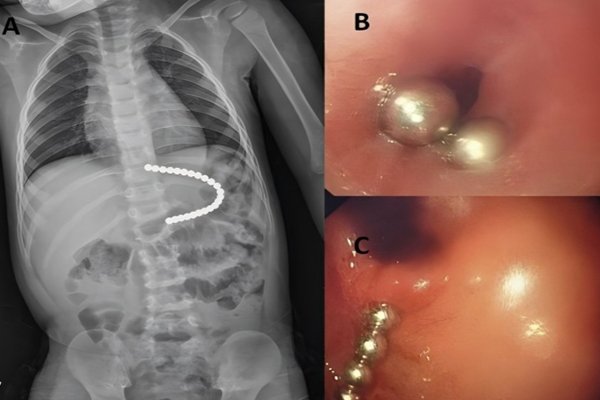
An X-ray is the most important diagnostic tool. It’s fast and painless. It confirms if magnets are present, how many there are, and roughly where they are in the digestive tract.
On X-rays, multiple magnets stuck together across tissue walls often look like a single object. Sometimes you can see a clear line or gap of tissue between them. The medical team may take several X-rays over time. This shows whether magnets are moving through the digestive system (good sign) or staying in the same place (sign they’re trapped).
3. Treatment Options
The treatment plan depends entirely on how many magnets there are and where they’re located on the X-ray.
- Observation: If it’s confirmed to be a single magnet that appears to be moving through the intestines normally, doctors may recommend “watchful waiting.” This involves monitoring the patient and checking their stool to confirm the magnet passes naturally.
- Endoscopy: If magnets are in the throat, stomach, or very first part of the small intestine, they can often be removed without major surgery. A procedure called endoscopy is performed. A pediatric specialist inserts a long, flexible tube with a camera and light down the patient’s throat. They use small tools passed through this tube to grab and remove the magnets.
- Surgery: If magnets have moved further into the small intestine, are attached across bowel walls, or if there are signs of holes or infection, emergency surgery is the only option. Pediatric surgeons stress that these operations are incredibly time-sensitive. The goal is to remove magnets, check the intestine for damage, and repair any holes or remove dead tissue sections. This is major surgery requiring general anesthesia and hospital stay for recovery.
The Best Cure is Prevention
The answer to what happens if you swallow magnets is serious. But the good news? These devastating injuries are almost entirely preventable. Creating a magnet-safe environment through awareness, supervision, and smart product choices is your ultimate defense.
For Parents and Caregivers
Your watchfulness is the first and most important line of defense, especially in homes with young children.
- Watch children closely. This is particularly crucial when they’re playing with any products containing magnets, including educational sets and magnetic toys. Active supervision means being in the same room and engaged, not just nearby.
- Check toys regularly. Inspect all magnetic toys for cracks, loose parts, or weak seams that could release a small, powerful magnet. If a toy is broken, throw it away immediately.
- Keep powerful magnets away. Magnet sets sold as “desk toys” or “stress relievers” for adults contain dozens of tiny, incredibly strong magnets. These products aren’t for children and should be stored in a locked container completely out of reach.
- Teach older children. Talk to older kids and teens about the dangers of using small magnets to fake piercings on their tongue, nose, or cheeks. Accidental swallowing is common in these situations. Explain that the danger isn’t just choking, but serious internal risk.
For Consumers
Every person who buys or uses magnetic products shares responsibility for safety.
- Be aware of hidden magnets. Small, powerful magnets are found in surprising household items: some jewelry clasps, fake body piercings, puzzle games, building sets, and DIY craft kits.
- Understand magnet strength. A magnet’s power isn’t always obvious. When you How to Choose the Right Magnet for your Application, consider who will be around it and what the risks are. For household use, safety is as important as strength.
- Secure magnets in projects. If you use magnets in DIY or craft projects, make sure they’re permanently and securely enclosed. Just gluing a raw magnet to a surface isn’t enough. For mounting applications, consider products like Pot Magnets, which house the magnet in a steel cup for safe and secure attachment.
General Safety Rules
- Create a “safe storage” location for all small magnetic items, just like you would for medications or cleaning supplies. This should be a high shelf or locked cabinet that young children can’t reach.
- After playing with a magnetic set, count the pieces to make sure all are accounted for before putting them away.
- As a leading supplier, we believe deeply in education. We’ve compiled a comprehensive guide to ensure you handle all magnetic products with proper care. We encourage all users to Read our official Magnet Safety Guidelines to fully understand the properties and safe handling procedures for all types of magnets.
Summarize
The potential consequences of swallowing magnets are severe. The path from a child’s mouth to a surgical operating room can be frighteningly fast. Swallowing multiple magnets isn’t a minor incident. It’s a life-threatening medical emergency that demands immediate action.
Remember the most critical points from this guide. A single swallowed magnet means calling your doctor. Two or more magnets means an immediate trip to the emergency room. Don’t wait, and don’t try to handle it at home.
The answer to what happens if you swallow magnets is a story of serious risk. But it doesn’t have to be your story. Through awareness of the dangers, careful supervision of children, and responsible use and storage of magnetic products, these devastating injuries are entirely preventable. Your knowledge and vigilance are the most powerful tools you have to keep your family safe.
We are a manufacturer specializing in the research and development of magnets with years of industry experience. Our product offerings include NdFeB magnets, ferrite magnets, and custom magnetic components. Our goal is to provide high-quality magnetic solutions to customers worldwide, and we also offer OEM/ODM customization services. If you have any questions about magnets or custom applications, please feel free to contact our team of experts.
Facebook
Twitter
LinkedIn
WhatsApp