
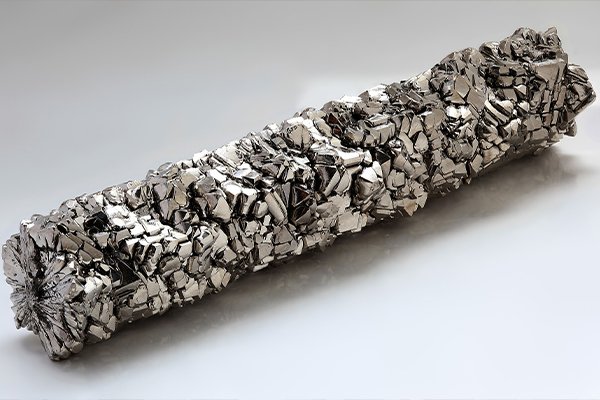
is titanium magnetic? For everyday use, the answer is no. Titanium won’t stick to your refrigerator magnet or any regular household magnet.
But the scientific answer is more complex. Titanium is actually classified as a paramagnetic material.
This means it has a very weak attraction to external magnetic fields. This effect is thousands of times weaker than the magnetism in metals like iron. You can’t notice it without highly sensitive lab equipment.
The simple question,
is titanium magnetic, leads us into the fascinating world of material science. Its non-magnetic nature isn’t just a small detail. It’s a fundamental property that makes titanium essential in critical industries.This guide will explore the science behind different types of magnetism. We’ll explain why titanium behaves as it does. You’ll learn how these properties are vital in medicine, aerospace, and high-tech engineering. We’ll compare it to other common metals and help you understand your own titanium items.
Table of Contents
The Science of Magnetism
Whether a material is magnetic involves more than a simple “yes or no.” It requires understanding physics at the atomic level.
What Makes a Material Magnetic?
A material’s magnetic properties depend on how its electrons behave. Think of each electron as a tiny spinning charge. This creates a minuscule magnetic field, like an atomic-scale compass needle.
In many materials, electrons exist in pairs that spin in opposite directions. Their magnetic fields cancel each other out. This results in no net magnetic effect.
The key lies in unpaired electrons. When an atom has one or more unpaired electrons, these tiny “compass needles” can respond to an external magnetic field. How they respond determines the material’s magnetic classification.
Three Classes of Behavior
Materials fall into three main categories based on their response to magnetic fields.
- Ferromagnetism: These are what we typically call “magnetic.” They’re strongly attracted to magnetic fields and can be permanently magnetized. Their unpaired electrons align in the same direction within large regions called magnetic domains. Examples include iron, nickel, and cobalt.
- Paramagnetism: This is where titanium belongs. Paramagnetic materials are very weakly attracted to magnetic fields. The unpaired electrons partially align with an external field, but this alignment is temporary. It randomizes as soon as the field is removed. The attraction is extremely weak. Other examples include aluminum, platinum, and magnesium.
- Diamagnetism: These materials are weakly repelled by magnetic fields. When exposed to a magnetic field, they create an induced magnetic field in the opposite direction. This repulsion is also very weak. Examples include copper, gold, silver, and even water.
For a deeper dive into the physics of these interactions, it helps to understand magnetic field fundamentals. You can learn more by reading about what a magnetic field is.
Titanium’s Place on the Spectrum
Titanium’s paramagnetic nature explains why the question
is titanium magnetic yes or no can be misleading. While it does react to a magnetic field, the effect is negligible in practical terms.To put this in perspective, we use magnetic susceptibility to measure how much a material becomes magnetized in a magnetic field.
A ferromagnetic material like iron has a positive magnetic susceptibility in the thousands or hundreds of thousands.
Titanium, a paramagnetic material, has a very small positive volume susceptibility of around +180 x 10⁻⁶. This tiny value confirms that its attraction is over a million times weaker than iron’s.
This distinction isn’t just academic. It has profound real-world consequences. Understanding the different types of magnets and their uses helps clarify why this subtle difference matters so much in engineering.
Titanium Alloys and Magnetism
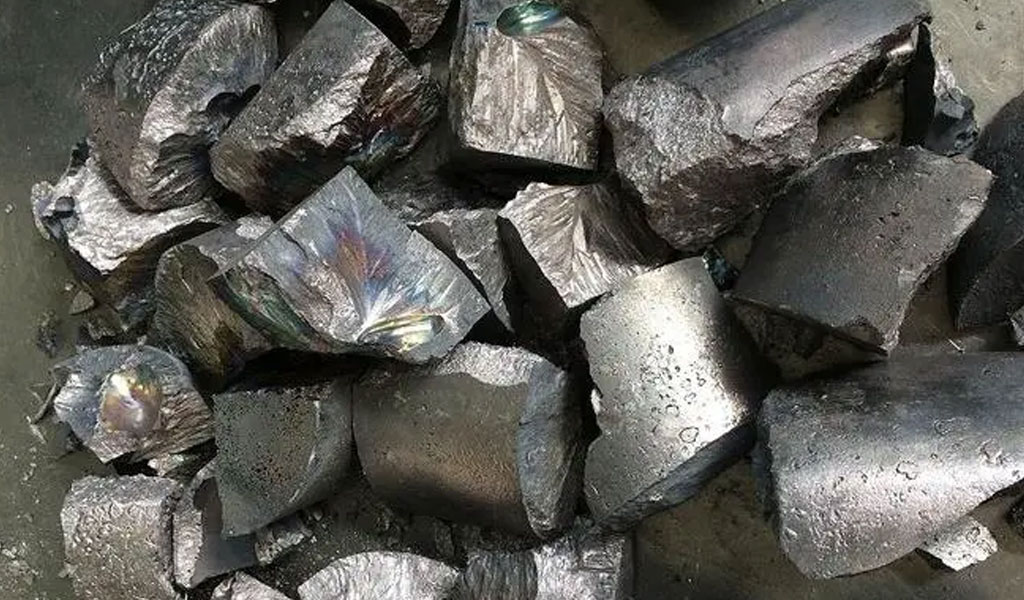
When we talk about “titanium,” we often mean a range of materials, not just one. The distinction between pure titanium and its alloys is critical for engineers and manufacturers.
Commercially Pure (CP) Titanium
Commercially Pure titanium comes in several grades, most commonly Grades 1 through 4. These grades are over 99% pure titanium. They contain only trace amounts of other elements like oxygen, nitrogen, and iron.
Since they’re almost entirely titanium, these grades show the purest form of its paramagnetic properties. For applications requiring the most non-magnetic version of titanium, CP grades are the clear choice.
The Workhorse: Ti-6Al-4V (Grade 5)
The most common titanium alloy is Ti-6Al-4V, also known as Grade 5 titanium. It accounts for more than 50% of all titanium usage worldwide. It dominates aerospace, medical, and industrial applications.
This raises an important question:
is grade 5 titanium magnetic? The alloy contains approximately 90% titanium, 6% aluminum, and 4% vanadium.Both aluminum and vanadium are paramagnetic, like titanium. Alloying them together doesn’t introduce ferromagnetism. Ti-6Al-4V remains a paramagnetic material with an exceptionally weak magnetic response.
For all practical purposes, Grade 5 titanium is considered non-magnetic. It’s safe for use in almost any magnetic-sensitive environment.
The Exception to the Rule
While pure and common titanium alloys are non-magnetic, there are rare instances where a titanium part might show a slight, unexpected magnetic response. This is critical for quality control in high-stakes industries.
The most common cause is contamination during manufacturing. If titanium is machined with tools previously used on iron or steel, microscopic iron particles can become embedded in the titanium’s surface. This can give the part a localized, weak ferromagnetic signature.
Another possibility, though far less common in commercial applications, involves specialty alloys. It’s theoretically possible to create titanium alloys that include ferromagnetic elements like iron or nickel for specific research or industrial purposes. However, these aren’t standard materials and wouldn’t be used where non-magnetic properties are required.
Real-World Impact
.png)
Titanium’s lack of significant magnetism isn’t just a curious property. It’s a superpower that enables some of our most advanced technologies.
Medical & Healthcare
Perhaps the most critical application of titanium’s non-magnetic nature is in medicine, especially concerning
titanium MRI safety.Imagine you have a titanium medical implant, such as a hip replacement, spinal fusion cage, or dental implant. Is it safe to undergo a Magnetic Resonance Imaging (MRI) scan?
The powerful magnetic fields in an MRI machine can be thousands of times stronger than Earth’s magnetic field. They pose a significant risk to ferromagnetic materials. A ferromagnetic implant could be pulled or twisted inside the body (the “projectile effect”). It could also rapidly heat up due to radiofrequency currents, causing severe internal burns.
Because titanium is paramagnetic, its interaction with an MRI’s magnetic field is negligible. It doesn’t heat up significantly and isn’t subject to strong magnetic forces. This makes it the gold standard for biocompatible implants.
Most titanium implants are designated as “MR Conditional.” This means they’ve been tested and are considered safe for patients undergoing MRI scans under specific, defined conditions (such as a certain magnetic field strength). For authoritative information on this topic, the U.S. Food and Drug Administration provides guidance on MRI Safety.
Aerospace and Defense
In aerospace, defense, and high-tech engineering, stray magnetic fields can be disastrous. Titanium’s combination of strength, low weight, and non-magnetic character makes it ideal for a
non-magnetic metals for engineering list.In avionics and navigation, aircraft components and fasteners made of titanium prevent interference with sensitive compasses and other electronic sensor systems that rely on Earth’s magnetic field. Aircraft structural integrity can be maintained without creating a magnetic signature.
For naval applications, particularly submarines, minimizing magnetic signature is paramount for stealth. Using titanium in hulls, piping, and other hardware helps vessels avoid detection by magnetic anomaly detectors (MAD).
Aerospace grade titanium properties transfer directly to these demanding marine environments.In scientific instruments, such as particle accelerators or electron microscopes, any unwanted magnetic field can deflect particle beams and corrupt experimental results. Titanium is often used to construct vacuum chambers and structural components in these environments to ensure magnetic purity. The powerful magnets used in such fields, like neodymium magnets, demand that surrounding structural materials be completely non-interactive.
Consumer Goods
The benefits of titanium’s properties extend to everyday products, where they answer common consumer questions.
Is titanium jewelry magnetic? The answer is a clear no. Your titanium ring, watch, or bracelet won’t be affected by magnets. It won’t trigger older, magnet-based security systems either. Its non-magnetic nature, combined with its hypoallergenic properties and durability, makes it superior for items worn against the skin.In high-end electronics, such as premium laptops and smartphones, titanium is used for the chassis. It provides exceptional strength and rigidity at very low weight. It ensures no magnetic interference with the device’s delicate internal components, such as speakers, sensors, and wireless charging coils.
A common myth involves airport security. While titanium will be detected by airport scanners, this isn’t because it’s magnetic. Modern scanners primarily use eddy current detection and other technologies that identify all metals, regardless of their magnetic properties.
Titanium vs. The Competition
o fully appreciate titanium’s role, it’s useful to compare its magnetic properties directly against other common metals. This
titanium vs stainless steel magnetic comparison is particularly important in engineering.Comparative Analysis Table
This table provides a clear overview for material selection, comparing key metals on their magnetic behavior.
Material | Magnetic Type | Magnetic Strength (Relative to Iron) | Key Application Notes |
Titanium | Paramagnetic | Extremely Weak | Premier choice for medical, aerospace; reliably non-magnetic. |
316L Stainless Steel | Paramagnetic | Very Weak | Good for medical/marine; can become weakly magnetic after machining. |
430 Stainless Steel | Ferromagnetic | Strong | Used in kitchen appliances, automotive trim; strongly magnetic. |
Aluminum | Paramagnetic | Extremely Weak | Lightweight and non-magnetic, but much lower strength than titanium. |
Copper | Diamagnetic | Repels (Extremely Weakly) | Excellent electrical conductor; completely non-magnetic. |
Iron | Ferromagnetic | Very Strong (Baseline) | The basis of most steels and magnets; the benchmark for magnetism. |
Titanium vs. Stainless Steel
The most common confusion is between titanium and “non-magnetic” stainless steel. While austenitic stainless steels like 316L are indeed non-magnetic in their annealed (softened) state, the story changes with work.
When 316L stainless steel is machined, bent, or welded (a process called cold working), its crystalline structure can change. This change can induce a small amount of ferromagnetism, making the part weakly magnetic.
In contrast, titanium’s paramagnetic nature is an intrinsic property of its atomic structure. It doesn’t become magnetic through machining or fabrication. This makes titanium the more reliable and consistent choice for applications where a zero-magnetic signature is non-negotiable.
For professionals seeking in-depth data, material property databases like MatWeb offer extensive information. Understanding the specific magnetic susceptibility of each material is key to making the right choice.
Conclusion
So,
is titanium magnetic? The definitive answer is that while it’s technically paramagnetic, for every practical application in medicine, engineering, and daily life, it’s considered a premier non-magnetic material.Its unique electron structure prevents the large-scale magnetic alignment seen in ferromagnetic metals like iron. This results in an interaction with magnetic fields so weak that it’s virtually non-existent.
This very lack of magnetism, combined with its incredible strength, low weight, and corrosion resistance, elevates titanium from a simple element to one of the most versatile and critical advanced materials in the modern world. Its properties are governed by standards from organizations like ASTM International, ensuring its reliability.
From safeguarding life in an MRI machine to ensuring submarine stealth, titanium’s non-magnetic superpower is fundamental to its value. The story of this metal is deeply intertwined with the science of magnetism and the processes behind how magnets are made.
We are a manufacturer specializing in the research and development of magnets with years of industry experience. Our product offerings include NdFeB magnets, ferrite magnets, and custom magnetic components. Our goal is to provide high-quality magnetic solutions to customers worldwide, and we also offer OEM/ODM customization services. If you have any questions about magnets or custom applications, please feel free to contact our team of experts.
Facebook
WhatsApp
Twitter
LinkedIn