
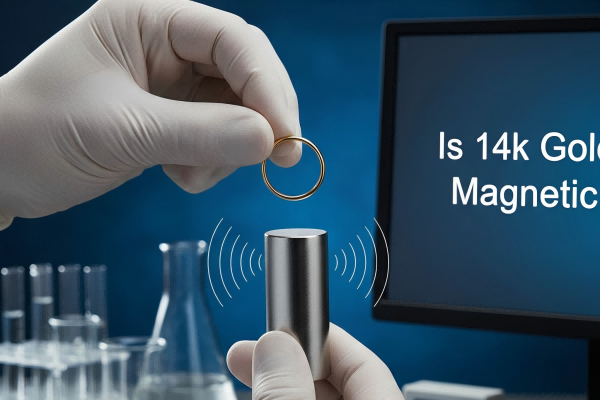
So, is 14k gold magnetic? The direct answer is no. Pure gold itself is not magnetic.
However, the complete answer is more complex. 14k gold is an alloy. This means it’s a mixture of pure gold and other metals. It can show a weak magnetic pull if it contains certain metals like iron or nickel in its composition.
This simple magnet test can help you check your jewelry’s authenticity. But it’s far from foolproof. A piece that reacts to a magnet doesn’t automatically mean it’s fake. And a piece that doesn’t react isn’t guaranteed to be real.
This guide will walk you through the composition of 14k gold. We’ll explain the science of magnetism. You’ll learn how to perform the 14k gold magnet test correctly. We’ll discuss its limitations and explore other methods to verify your gold with confidence.
Table of Contents
Add Your Heading Text Here
To understand why magnetism is even a question for 14k gold, you need to understand what “14k” means. It’s all about purity and the metals mixed with gold.
The Karat System
The term “karat” is abbreviated as “k.” It measures the purity of gold. The system is based on a total of 24 parts.
Pure gold is designated as 24k. This means it is 24 out of 24 parts gold, or 99.9% pure.
Following this logic, 14k gold consists of 14 parts pure gold and 10 parts of other metals. Mathematically, this is 14 divided by 24, which equals 58.3%. Therefore, any piece stamped “14k” should contain 58.3% pure gold. The remaining 41.7% is a blend of other metals, known as alloys.
The Role of Alloys
Why isn’t all jewelry made from pure 24k gold? The answer lies in the metal’s properties. Pure gold is incredibly soft and malleable.
A 24k gold ring would easily bend, scratch, and deform with daily wear. It’s simply not practical for most jewelry applications. This is where alloys come in.
Metals are mixed with gold for several critical reasons:
- Durability and Hardness: Alloying metals like copper, silver, and zinc significantly increase the gold’s strength. This makes it suitable for crafting jewelry that can withstand a lifetime of wear.
- Color: The specific alloys used directly influence the final color of the gold. This is how jewelers create beautiful variations like white gold, rose gold, and even green gold.
- Cost: By reducing the pure gold content, the overall cost of the jewelry item is lowered. This makes it more accessible to a wider market.
Understanding the concept of gold purity is fundamental for any buyer or collector. The 41.7% of alloy metals in 14k gold are the key to understanding its potential magnetic properties.
The Science of Magnetism
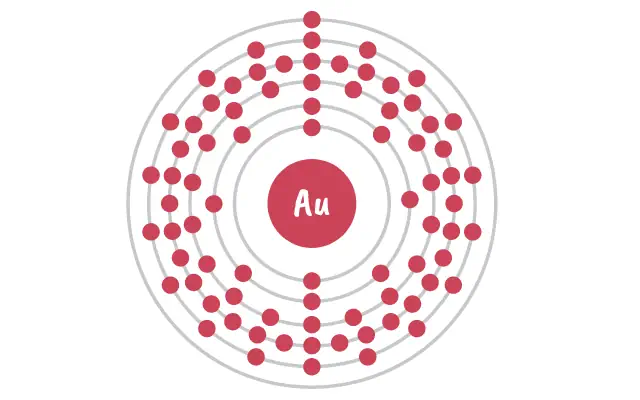
Before testing your gold, it’s helpful to grasp the basics of why some materials stick to a magnet while others don’t. The phenomenon is rooted in the atomic structure of the metals themselves.
A Look at Properties
Magnetism originates from the movement and alignment of electrons within an atom’s orbitals. The collective behavior of these atomic-level magnets determines how a material will respond to an external magnetic field.
We can group metals into three main categories based on their magnetic response.
- Ferromagnetism: This is a strong, noticeable attraction to a magnet. Metals like iron, nickel, and cobalt are ferromagnetic. Their atomic magnets easily align in the same direction, creating a powerful collective force. These are the primary metals that can make a gold alloy magnetic.
- Paramagnetism: This is a very weak attraction to a magnet. Metals like platinum, aluminum, and copper are paramagnetic. The attraction is so faint that it’s typically undetectable with a common household magnet.
- Diamagnetism: This is a very weak repulsion from a magnet. Pure gold, silver, and zinc are diamagnetic. They are actually slightly pushed away by a magnetic field. This effect is also far too weak to be observed without sensitive lab equipment.
For a deeper dive, the principles of Ferromagnetism are explained by many university and educational resources. For our purposes, the key takeaway is that only ferromagnetic metals will cause a noticeable reaction during a home test.
A Detailed Breakdown
Now we can connect the two concepts. Is 14k gold magnetic? It depends entirely on which of the alloy metals from that 41.7% are present in your specific piece of jewelry.
The Alloy Connection
The magnetic signature of 14k gold is a direct result of its alloy composition. A piece of 14k yellow gold will have a different mix of metals than 14k white gold. Thus, it will have a different potential reaction to a magnet.
This is why a simple “yes” or “no” answer is insufficient. The color of your gold provides the biggest clue. Why is my gold magnetic? The answer is almost always found in the specific metals used to achieve its color and durability.
Common Alloy Signatures
Let’s break down the typical alloy compositions for different colors of 14k gold and their expected magnetic properties. This provides a clear reference for understanding the results of a 14k gold magnet test.
Type of 14k Gold | Common Alloying Metals | Typically Magnetic? | Explanation |
Yellow Gold | Copper, Silver, Zinc | No | The primary alloys used in yellow gold—copper, silver, and zinc—are either diamagnetic or weakly paramagnetic. A reaction is highly unlikely. |
White Gold | Nickel, Palladium, Silver, Zinc | Often, Yes (Weakly) | This is the most common exception. Nickel is a ferromagnetic metal. If your white gold is made with a nickel alloy, it will likely show a slight pull from a strong magnet. Modern white gold often uses palladium, which is not magnetic, to avoid nickel allergies. |
Rose Gold | Copper, a small amount of Silver | No | Rose gold’s distinct color comes from a high percentage of copper in the alloy mix. Since copper is not ferromagnetic, rose gold will not be magnetic. |
Green Gold | Silver, sometimes Cadmium/Zinc | No | Green gold, or electrum, is an alloy of gold and silver. Since silver is diamagnetic, green gold will not be magnetic. |
The Clasp Exception
A very common point of confusion arises with chains, necklaces, and bracelets. You might find that the chain itself shows no reaction. But the clasp sticks firmly to the magnet.
This is usually not a sign of a fake piece. Clasps, particularly lobster clasps and spring rings, contain a tiny steel spring inside the mechanism. Steel contains iron and is highly magnetic. This spring is necessary for the clasp’s function and durability. Its presence is normal in genuine gold jewelry.
Always be sure to test the body of the jewelry separately from its clasp or any moving parts. This will help you avoid a misleading result.
How to Test Your Gold

Performing a magnet test at home is simple. But doing it correctly requires the right tool and proper technique. This is how to tell if 14k gold is real with a magnet. Or at least, how to screen for obvious fakes.
Choosing the Right Magnet
Your standard kitchen refrigerator magnet will not work for this test. It is far too weak to detect the small amounts of ferromagnetic metals that might be present in a gold alloy.
For reliable results, you need a strong magnet. The industry standard is a neodymium magnet, also known as a rare-earth magnet. These are powerful enough to induce a reaction in alloys with even a low nickel content. Using high-quality strong neodymium magnets is crucial for an accurate assessment. These magnets are specifically designed for tasks requiring significant magnetic force. This makes them perfect for testing gold with a magnet.
The Testing Process
Follow these steps carefully to ensure a clean and accurate test.
- Find a Clean Surface
- Start on a flat, stable, and non-metallic surface like a wooden table or a stone countertop. Make sure there are no other metal objects nearby that could interfere with the magnetic field.
- Isolate the Item
- Place the single piece of jewelry you want to test on the surface. If you are testing a chain, extend it and make a mental note to test the clasp and the chain links separately. This is a critical step.
- Bring the Magnet Close
- Hold your neodymium magnet and slowly bring it toward the gold item. Approach to within an inch. But do not let the magnet snap directly onto the jewelry. A powerful magnet can be strong enough to scratch the polished surface of the gold. Using a powerful tool like a block neodymium magnet can make observation easier. Its larger surface area provides a more stable field.
- Observe the Reaction
- Pay very close attention to how the item behaves as the magnet gets near. There are three possible outcomes.
- No reaction at all: The jewelry shows no attraction or movement whatsoever. This is the expected result for most real 14k yellow, rose, and palladium-based white gold.
- A strong, instant pull: The magnet aggressively grabs the item, or the item jumps to meet the magnet. This is a major red flag. The item is almost certainly fake gold. It’s likely made of a magnetic base metal like steel or iron and then plated with a thin layer of gold. This is the clearest sign of fake gold magnetic properties.
- A very weak, slight drag or pull: You feel a subtle tug or see the item shift slightly as the magnet passes over it. This result is ambiguous. It could indicate real 14k white gold made with a nickel alloy. Or it could be a piece with a hidden magnetic component, like the spring in a clasp. This outcome means more investigation is needed.
A safety note: Neodymium magnets are extremely powerful. Keep them away from electronics like phones and computers, pacemakers, and credit cards. Handle them with care to avoid pinching your fingers between the magnet and another surface.
Understanding Limitations
It is absolutely critical to understand that the magnet test is not foolproof. Relying on it as your only method of verification can lead to costly mistakes. It’s a tool for screening, not for final confirmation.
The “False Negative”
This is the biggest limitation of the 14k gold magnet test. A “false negative” occurs when a fake piece of jewelry passes the test. It shows no magnetic attraction.
Sophisticated counterfeiters no longer use steel as a base metal. Instead, they use non-magnetic metals like brass, copper, zinc alloys, or even tungsten. These have a similar density to gold. These items are then heavily plated with real gold.
Such a piece will feel heavy and will not react to a magnet. This fools anyone who relies solely on this test. This is why no magnetic pull does not guarantee that you have real gold.
The “False Positive”
A “false positive” is when a piece of genuine gold fails the test by showing a magnetic attraction. This can cause unnecessary worry that your jewelry is fake when it is, in fact, real.
As we’ve discussed, there are two primary reasons for this:
- Nickel Alloys: A significant portion of 14k white gold on the market is made with nickel alloys. This real gold will be slightly magnetic.
- Magnetic Components: The most common culprit is the steel spring inside a clasp. On more complex pieces, there could be steel pins or other structural components used in repairs or manufacturing that are magnetic.
The key takeaway is this: The magnet test is a tool for elimination, not definitive confirmation. A strong magnetic pull almost certainly means the item is fake. However, no magnetic pull doesn’t guarantee it’s real. And a weak pull doesn’t guarantee it’s fake.
Beyond the Magnet
If your magnet test is inconclusive or if you want absolute certainty, there are several other verification methods you can use. These range from simple at-home checks to professional analysis.
At-Home Methods
- The Hallmark Test: This is the first thing you should do. Look closely at your jewelry, using a magnifying glass if necessary, for small stamps. These are called hallmarks. For 14k gold, you should find a stamp that says “14k,” “14kt,” or the European numerical mark “585” (representing 58.3% gold). The absence of a hallmark is a red flag. Though counterfeiters can also fake these marks. Authoritative sources like the US Mint provide information on marking standards for precious metals.
- The Acid Test (with caution): Gold testing kits are available online. They involve scratching the item on a test stone to leave a small streak of metal. Then applying a drop of nitric acid formulated for 14k gold. If the streak dissolves, it’s not 14k gold. This method is effective but has a major drawback: it is destructive. You must scratch your jewelry. If done incorrectly, the acid can damage the piece. We only recommend this for scrap gold or items you are not concerned about damaging.
The Professional Appraisal
For any valuable, sentimental, or antique piece, the only 100% certain method of verification is to take it to a professional.
A reputable jeweler or appraiser has non-destructive tools that provide definitive answers. Visiting a certified professional jeweler is the best way to protect your investment.
They typically use two main methods:
- X-Ray Fluorescence (XRF) Scanner: This is the gold standard. An XRF gun shoots x-rays at the item. This causes the atoms in the metal to fluoresce at different energy levels. The machine reads these energy levels and provides a precise, on-screen breakdown of the item’s exact metallic composition. It shows percentages of gold, copper, nickel, zinc, etc.
- Density Test: This classic method involves weighing the item in air and then weighing it while submerged in water. By calculating its specific gravity (density), a jeweler can determine if it matches the known density of 14k gold. This is very effective at spotting fakes made from less dense materials.
Even professionals use simple tools for initial checks. This is why having a reliable set of testing magnets is common in any workshop for quick screening.
Caring for Your Jewelry
If you discover your real 14k gold is slightly magnetic, you might wonder if this affects how you should care for it or use it. For the most part, the answer is no. But there is one critical exception.
Everyday Scenarios
- Airport Security: No, the very weak magnetism in some 14k gold is not strong enough to set off metal detectors at the airport. These systems are designed to detect larger masses of specific types of metal.
- MRI Scans: Yes, this is extremely important. You must remove all jewelry before an MRI scan, regardless of its magnetic properties. The powerful magnetic field of an MRI machine can cause any metallic item to heat up significantly or become a dangerous projectile. It is a critical safety protocol. The FDA’s page on MRI safety provides essential guidelines on this topic.
- Storage: No special storage is needed. A slightly magnetic piece of gold can be stored with all your other jewelry without any issue.
Conclusion
Let’s summarize the key points to help you make confident decisions about your 14k gold. The journey to understanding your jewelry begins with a simple question but leads to a wealth of knowledge.
- Pure gold is not magnetic, but 14k gold is an alloy. It can be slightly magnetic if it contains ferromagnetic metals like nickel. This is common in white gold.
- A strong magnet is a fantastic tool to quickly and easily identify obvious fakes made from magnetic base metals like steel or iron.
- The 14k gold magnet test is not foolproof. Sophisticated fakes can be made from non-magnetic metals. And genuine gold can sometimes be magnetic due to its alloy or components like a clasp spring.
- For true verification, always look for hallmarks (“14k” or “585”). For absolute certainty on valuable items, a professional appraisal using an XRF scanner is the only definitive method.
Armed with this knowledge, you can now approach the question “is 14k gold magnetic?” not with confusion, but with confidence. You have the tools to perform a smart initial assessment. More importantly, you know when to seek an expert’s eye to protect your investment and give you peace of mind.
We are a manufacturer specializing in the research and development of magnets with years of industry experience. Our product offerings include NdFeB magnets, ferrite magnets, and custom magnetic components. Our goal is to provide high-quality magnetic solutions to customers worldwide, and we also offer OEM/ODM customization services. If you have any questions about magnets or custom applications, please feel free to contact our team of experts.
Facebook
Twitter
LinkedIn
X