
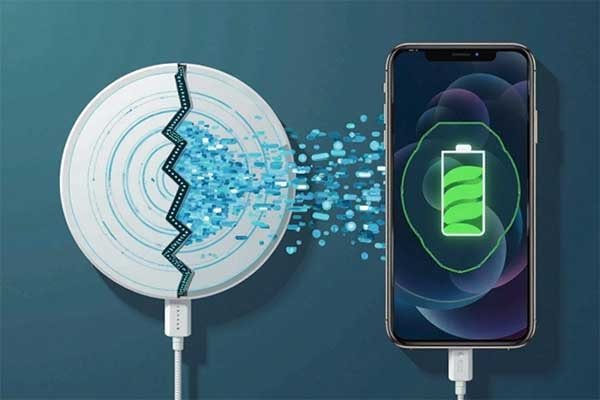
Are magsafe chargers safe? Yes, they are. Genuine and Apple-certified MagSafe chargers come with multiple safety features built right in.
Safety drives the entire MagSafe design. This isn’t just about making charging easier. It’s about delivering power in a smart, secure way.
This guide will dig into the details behind that simple answer. We’ll look at the technology’s built-in protections and examine the heat these chargers produce. You’ll learn the real impact of magsafe magnets on other items. We’ll also explore the crucial difference between certified and uncertified products.
These details will give you complete confidence when you snap your iPhone onto a MagSafe charger.
Table of Contents
How MagSafe Works
To understand its safety, we need to see how MagSafe charging actually works. It’s not magic. It’s a refined use of established science.
The core technology is inductive charging. Picture two sides of a transformer without the physical connection. A transmitter coil in the charger creates an oscillating magnetic field.
Your iPhone has a receiver coil inside that captures this field. It converts the magnetic energy back into electrical current. This current charges your battery.
MagSafe’s key innovation is its use of magnets. The charger has a ring of powerful magnets. These align perfectly with a matching ring in the iPhone. This alignment is crucial.
Perfect alignment is the secret to MagSafe’s efficiency and safety. Standard Qi wireless charging can have alignment issues. When coils don’t line up properly, energy gets wasted as excess heat. Charging speeds also drop. MagSafe solves this problem elegantly.
The system has several key components working together:
The Transmitter Coil sits in the charging puck. It generates the magnetic field when power flows through it.
The Receiver Coil is built into the back of the iPhone. It captures the magnetic field and converts it back into usable electricity for the battery.
The Alignment Magnets form a circular array of high-quality magnets. They ensure the transmitter and receiver coils center perfectly every single time. This system relies on high-quality neodymium magnets. These provide strong attraction in a compact form.
An NFC (Near Field Communication) chip enables a digital “handshake.” This lets the iPhone identify the accessory and confirm it’s a certified MagSafe device. It also unlocks the full 15W charging speed.
Apple's Built-In Protections

A certified “Made for MagSafe” charger is more than just a magnet and a coil. It’s an intelligent system with a robust safety net. This is a key part of Apple’s ecosystem.
Safety begins with a communication handshake between the charger and iPhone. The moment they connect, they start exchanging information. This ensures conditions are optimal for charging.
This communication enables several critical safety features. These operate continuously in the background.
Thermal Monitoring is perhaps the most important feature. Sophisticated sensors in both the iPhone and official MagSafe charger constantly measure temperature.
The system doesn’t just power through if it detects either device getting too warm. Instead, charging speed automatically and intelligently reduces. If temperatures continue rising, charging pauses entirely until it’s safe to resume.
Foreign Object Detection (FOD) is another crucial feature. This protocol prevents accidents.
The MagSafe system can detect metallic objects placed between the charger and phone. This includes keys, coins, or foil gum wrappers.
If a foreign object is detected, the charger immediately cuts power. This prevents the magnetic field from inducing current in the metal object. Without this protection, the object could heat up dangerously. This could damage your phone or even cause burns.
The system also employs meticulous Voltage and Current Regulation. The charger and iPhone don’t operate at a fixed power level.
They actively negotiate optimal voltage and current. This is based on the battery’s charge level, temperature, and overall system activity. This prevents overcharging and ensures the battery receives power in the most efficient and healthy manner.
Apple outlines these safety standards in its guidelines for how to use MagSafe chargers. This gives users official confirmation of these protective measures.
Is MagSafe Too Hot?

One common concern is heat. Is your MagSafe charger getting too hot? It’s important to distinguish between normal warmth and dangerous heat.
First, let’s establish a baseline. Generating some heat is completely normal during any charging process. This is true for both wired and wireless charging.
Energy transfer is never 100% efficient. Lost energy primarily converts into heat. With wireless charging, this effect is more noticeable. The inefficiency is slightly higher and heat generates across a wider surface area on your phone’s back.
During our testing with an iPhone 15 Pro, we found the device’s back reaches noticeable warmth. This temperature is often 35-40°C (95-104°F). This happens especially when charging from a low battery level or when the phone performs background tasks.
This warmth level is well within normal operating parameters defined by Apple. It’s not a cause for concern. The phone might feel warm to touch, but it shouldn’t be uncomfortably hot.
Several factors influence how warm your device gets. Charging from very low battery percentage requires more power initially. Using your phone for intensive tasks like gaming or video streaming while charging also generates significant additional heat.
So when should you worry? There are clear signs indicating a problem beyond normal operation.
If the phone becomes too hot to comfortably hold, that’s a red flag. Built-in thermal protections should prevent this. It could indicate an issue with the charger or environment.
Your iPhone has its own warning system. If it displays a temperature warning on screen and pauses charging, it has detected unsafe operating temperatures.
Any unusual smells, particularly hot plastic scents, are serious warning signs. Visible discoloration or warping on the charger or phone case also indicates malfunction. If you experience any of these, disconnect the charger immediately.
Third parties have confirmed this normal operating warmth. In-depth thermal imaging from tech reviewers at AnandTech has corroborated these typical temperature ranges during MagSafe charging cycles. This lends further credibility to what users can expect.
Debunking MagSafe Myths
Strong magnets have led to many questions and myths. Are magsafe magnets a risk to your other devices and personal items? Let’s break down the real-world risks.
Apple’s magnets are strong, but they’re also precisely engineered. Their magnetic field is powerful enough for alignment but has very short effective range. It’s designed to interact primarily with the iPhone itself, not with the world at large.
However, certain items are more susceptible to magnetic fields than others. Understanding the differences is key to using MagSafe without worry. We’ve broken down risk levels for common items in a clear table.
Item | Risk Level | Explanation |
Modern Credit/Debit Cards | Very Low | The vast majority of modern credit and debit cards rely on EMV chips and NFC for transactions. These technologies are immune to magnetic fields. While cards still have a magnetic stripe, it is far more robust than in the past. Prolonged, direct contact with the charger is best avoided, but a quick pass is highly unlikely to cause any issues. |
Hotel Key Cards / ID Badges | Moderate | These types of cards often use what are called “low-coercivity” magnetic stripes. This means the magnetic data on them can be easily scrambled or erased. It is not recommended to keep these cards in a MagSafe wallet attachment or directly between the phone and charger. |
Pacemakers & Medical Devices | High (Caution Required) | This is the most critical point and requires serious attention. The magnets and radio components in MagSafe products can interfere with medical devices like pacemakers and defibrillators. Both Apple and medical device manufacturers strongly advise keeping MagSafe products a safe distance away. The general guidance is to maintain a separation of more than 6 inches (15 cm), and more than 12 inches (30 cm) when the device is actively wirelessly charging. |
Hard Drives / USB Sticks | Very Low | Modern storage is overwhelmingly solid-state. The SSDs in laptops, phones, and USB flash drives are not affected by magnets. While you should never place a powerful magnet directly on an older, spinning platter hard disk drive (HDD), these drives are well-shielded, and the field from a MagSafe charger is too weak at a distance to pose a realistic threat. |
The most important takeaway concerns medical devices. The risk is real and well-documented. For your safety, follow official guidance. Apple provides specific and clear warnings on its support page regarding potential magnetic interference with medical devices.
For broader medical perspective on magnets and heart devices, information from sources like the American Heart Association can provide additional context and peace of mind.
Understanding these magnet properties helps put risk in perspective. The technology behind the MagSafe array relies on the same principles governing all powerful commercial magnets. It’s just in a highly optimized and shielded form factor.
MagSafe and Battery Health
This is a major question for iPhone users: does MagSafe degrade your iPhone’s battery faster? The answer is nuanced but ultimately reassuring.
First, it’s essential to understand that all lithium-ion batteries degrade over time. This includes the one in your iPhone. Every charge and discharge cycle contributes to this aging process. The single greatest enemy of battery longevity is heat.
Let’s compare MagSafe to other common charging methods in terms of heat generation.
Fast Wired Charging using a 20W or higher power adapter can generate significant heat. This is especially true when charging the first 50-80% of the battery.
MagSafe Charging at its peak of 15W also generates moderate heat. This is partly due to the inherent inefficiency of wireless energy transfer we discussed earlier.
Slow Wired Charging using an old 5W power brick is the “gentlest” method. It generates the least heat and is technically best for long-term battery health. However, it comes at the cost of speed.
Here’s where MagSafe’s intelligence provides a benefit. Its thermal management system actively throttles charging speed when it detects excess heat. This provides a built-in protective layer. Some aggressive, fast-wired charging scenarios might not manage heat as dynamically.
Apple designs its batteries to a high standard. The company states that iPhone batteries are designed to retain up to 80% of their original capacity at 500 complete charge cycles.
Your iPhone also has a software feature called “Optimized Battery Charging.” This learns your daily routine. It waits to finish charging past 80% until you need it. This reduces time the battery spends at full, high-stress charge. This feature works with all charging methods, including MagSafe.
What’s the conclusion? While MagSafe may generate more heat than slow 5W charging, its impact on battery health is broadly comparable to fast wired charging. For most users, the marginal difference in battery degradation over the device’s lifespan will be negligible. The convenience it offers far outweighs this small difference.
Certified vs. Knock-Offs
The real danger in MagSafe charging doesn’t come from the technology itself. It comes from cheap, uncertified knock-offs that try to imitate it. This is where your concern about whether are magsafe chargers safe should focus.
Understanding the difference between certified products and counterfeits is the most important step you can take. This ensures the safety of your device.
There are three main categories of “MagSafe” products you’ll find on the market. Their differences in performance and safety are vast.
An Apple Certified “Made for MagSafe” product contains the official Apple MagSafe module. It has been rigorously tested and guaranteed to deliver full 15W charging speed. It communicates with the iPhone for all safety features.
A “MagSafe Compatible” product does not contain the official Apple module. It simply has magnets to help align with the iPhone. It can only charge at standard Qi wireless speed, typically 7.5W. It lacks advanced safety communication.
A Cheap or Uncertified Knock-Off is the most dangerous category. These products often use weak magnets and low-quality components. They have minimal or non-existent safety features. They pose significant risk to your device.
The following table clearly illustrates the critical differences.
Feature | Apple Certified (“Made for MagSafe“) | “MagSafe Compatible” | Cheap/Uncertified Knock-Off |
Max Charging Speed | Up to 15W | Typically 7.5W (Standard Qi speed) | Unpredictable, often 5W-7.5W |
Safety Features | Full suite: Thermal, FOD, Power Regulation | Basic Qi safety features, no advanced communication | Minimal to none. High risk. |
Magnetic Alignment | Strong, precise alignment | Varies; often weaker magnets | Weak, poor alignment, leading to heat |
NFC Identification | Yes, enables unique animations/features | No | No |
Price | Highest | Moderate | Lowest |
Risk of Damage | Very Low | Low | High (Overheating, battery damage) |
How can you be sure you’re buying a safe product? Look for the official “Made for MagSafe” logo on the product’s packaging. This is a trademarked badge that manufacturers can only use after their product passes Apple’s strict certification process.
Manufacturers must go through Apple’s rigorous MFi Program to get this certification. This program ensures accessories meet Apple’s high standards for safety, quality, and performance. Buying from reputable brands that participate in this program is your best defense against dangerous fakes.
Safe Charging Best Practices
Now that you understand the technology and risks, you can take simple steps to ensure safe and efficient charging. These best practices will help you get the most out of your MagSafe experience.
- Always Buy Certified. We cannot stress this enough. Only purchase chargers and accessories featuring the official “Made for MagSafe” logo. This guarantees they have the full suite of Apple’s safety features.
- Use a Quality Case. A proper MagSafe case ensures perfect alignment between charger and phone. A thick, non-MagSafe case can weaken the magnetic connection. This reduces efficiency and generates excess heat.
- For optimal alignment and safety, always use a “Made for MagSafe” certified case. If you’re building a custom solution or repairing a case, sourcing high-quality components is critical. The OEM Apple 17 MagSafe Magnet For Phone Case ensures perfect compatibility and magnetic strength.
- Charge in a Cool, Ventilated Area. Avoid charging your iPhone under blankets, in direct sunlight, or on soft surfaces like pillows that trap heat. A hard, flat surface allows air to circulate and dissipate warmth effectively.
- Remove Obstructions. Before snapping the charger on, remove any MagSafe wallet attachments. Leaving credit cards or hotel keys in place risks the cards themselves. It can also interfere with charging.
- Don’t “Game and Charge.” Performing processor-intensive tasks like playing high-end games or editing 4K video while charging generates immense heat. This combination is one of the fastest ways to degrade your battery’s long-term health. Let it charge, or use it, but try to avoid doing both intensively simultaneously
Charge With Confidence
So we return to our original question: are magsafe chargers safe? The more precise question is whether you’re using a certified MagSafe charger correctly.
The answer for genuine, certified products is a resounding yes. They’re designed from the ground up with safety as a top priority.
We’ve learned that generating some warmth is normal. But excessive heat is a warning sign.
We’ve seen that magsafe magnets pose minimal risk to most modern items. The critical and life-saving exception is medical devices, which must be kept at safe distance.
Most importantly, we’ve established that the real threat lies with uncertified, counterfeit chargers. These lack the essential safety protocols that make the technology trustworthy.
Armed with this knowledge, you can now enjoy the convenience and elegance of MagSafe charging with confidence. You’re protecting both your expensive device and, more importantly, yourself.
We are a manufacturer specializing in the research and development of magnets with years of industry experience. Our product offerings include NdFeB magnets, ferrite magnets, and custom magnetic components. Our goal is to provide high-quality magnetic solutions to customers worldwide, and we also offer OEM/ODM customization services.If you have specific procurement requirements, welcome to contact professional magnet manufacturers for quotes and technical support.
Facebook
Twitter
LinkedIn
WhatsApp