
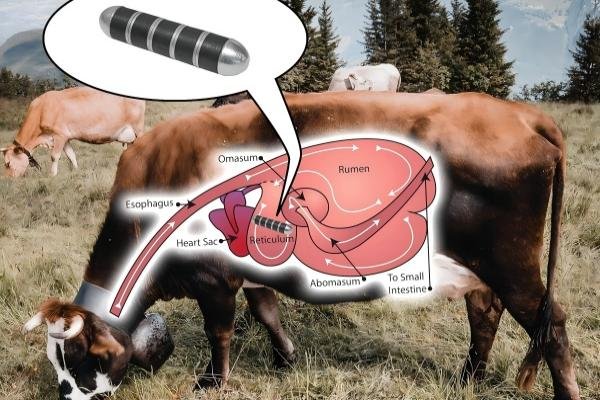
A cow stomach magnet is an essential veterinary tool that farmers give to cattle by mouth. The magnet settles in the cow’s second stomach, called the reticulum. It stays there for the animal’s entire life.
The magnet has one job. It attracts and traps sharp metal objects that cows accidentally eat. These objects include wire fragments, nails, and staples. By catching these dangerous items, the magnet stops them from moving around and piercing the vital stomach wall.
This simple, one-time procedure is the most effective way to prevent a dangerous and costly condition known as Hardware Disease (Traumatic Reticuloperitonitis). It protects the animal’s health and productivity. In many cases, it saves the animal’s life. This article is your complete, expert guide to understanding, selecting, and using this essential device for modern ranch management best practices.
Table of Contents
The Threat of Hardware Disease
Understanding the problem is the first step toward effective prevention. Hardware disease is a silent threat. It can have severe consequences for individual animals and the economic stability of your entire operation. It is one of the most common ailments in adult cattle. It’s also one of the most preventable.
Understanding Hardware Disease
Traumatic Reticuloperitonitis goes by the common name Hardware Disease. It happens when a cow swallows a sharp, metal object. Cattle are not picky eaters. They don’t use their lips to sort feed like horses do. They often swallow foreign objects along with their forage or grain.
These heavy metal objects fall into the first available stomach compartment due to gravity. This compartment is the reticulum. The reticulum has a honeycomb-like lining. It undergoes constant, powerful contractions to mix feed.
A sharp object like a nail or wire can get trapped in these folds. The contractions can then force it to puncture the reticulum wall. This hole allows digestive bacteria and contents to leak into the abdominal cavity. This causes a severe infection called peritonitis.
The reticulum sits directly next to the diaphragm and heart. Because of this location, the object can also be pushed through the diaphragm. It can pierce the sac surrounding the heart, which is called the pericardium. This leads to a condition called traumatic pericarditis, which is often fatal. For a detailed clinical overview, the Merck Veterinary Manual provides an authoritative resource on Traumatic Reticuloperitonitis.
Recognizing the Symptoms
Recognizing the signs of hardware disease early is critical. However, symptoms can be subtle. They’re easily mistaken for other conditions. The signs are generally divided into acute (sudden) and chronic (long-term) phases.
An acute case often shows clear signs of pain and distress. You may observe:
- Sudden and complete loss of appetite.
- A sharp drop in milk production in dairy cattle.
- An arched back and reluctance to move or lie down.
- Audible groaning, especially when defecating or lying down.
- A low-grade fever.
- A positive “grunt test,” where the animal groans when pressure is applied to the xiphoid process.
Chronic hardware disease can be more sneaky. The initial puncture may have been small. This leads to a localized abscess rather than widespread peritonitis. Symptoms include:
- Poor or inconsistent appetite.
- Gradual weight loss or failure to thrive.
- Consistently lower milk yield.
- Intermittent signs of indigestion or bloat.
- A general “unthrifty” appearance.
The Economic Farm Impact
The financial consequences of hardware disease extend far beyond a single sick animal. The economic impact on your farm can be substantial. It affects both revenue and expenses.
Direct costs are the most obvious. These include the high price of veterinary intervention. This can involve diagnostics, antibiotics, and in severe cases, complex rumenotomy surgery to manually remove the object. Sadly, in many advanced cases, euthanasia is the only humane option. This results in the total loss of the animal.
Indirect costs are often more significant over time. These include:
- Drastic loss of milk yield for the duration of the illness. Production may never return to previous levels.
- Reduced weight gain and poor feed conversion in beef cattle, delaying market readiness.
- Loss of valuable genetics if a breeding animal is affected.
- Potential condemnation of the carcass at the processing plant if abscesses or peritonitis are found.
The cumulative effect of these losses shows the importance of prevention. As detailed by agricultural extensions like Penn State Extension, managing cattle health is directly linked to farm profitability, with preventable diseases being a major source of economic drain. A cow stomach magnet is a form of insurance against these cascading financial losses.
How Cow Magnets Work
The effectiveness of a cow stomach magnet lies in its simple application of physics within the complex biology of the ruminant digestive system. It is a passive device that performs an active and life-saving function.
The Ruminant Stomach
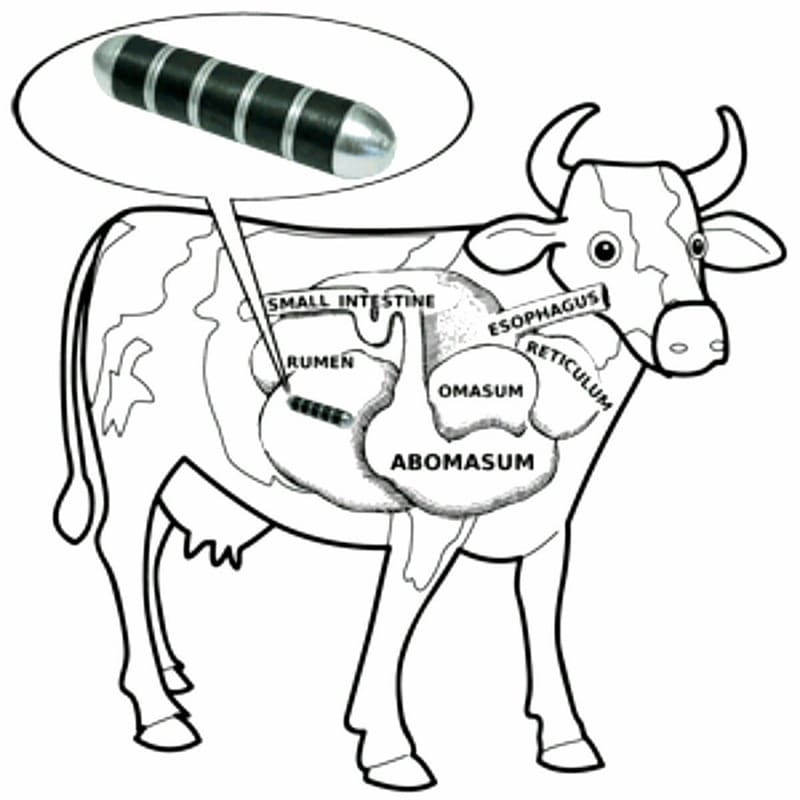
To understand how the magnet works, we must first briefly review the anatomy of the cow’s stomach. Ruminants have a unique four-compartment stomach. It’s designed to digest fibrous plant matter.
The four compartments are the Rumen, Reticulum, Omasum, and Abomasum.
Feed is first swallowed into the rumen. This is a large fermentation vat. It then moves freely between the rumen and the reticulum.
The Reticulum is our focus. It’s located at the front of the abdominal cavity. It acts as a pump and sorting chamber. Its honeycomb-patterned lining helps trap non-food items. Because it is the most forward and lowest compartment, heavy objects like metal naturally settle here.
From the reticulum, digested material moves to the omasum for water absorption. Then it goes to the abomasum, the “true stomach,” for acid digestion.
Magnet Journey and Function
When a cow stomach magnet is given to a cow, its density and weight cause it to fall through the esophagus. It lands directly in the reticulum. It is designed to be heavy enough to stay there permanently.
Once in place, the magnet begins its lifelong job. Its powerful magnetic field attracts any ferrous metal (iron-containing) that the cow later swallows.
Nails, staples, pieces of baling wire, and other metallic debris are pulled toward the magnet. They’re held securely against its surface.
The magnet does not remove the metal from the cow. Instead, it immobilizes it. By collecting all the sharp objects into a single, contained mass, it prevents any individual piece from floating freely. This stops them from being pushed through the reticulum wall during its powerful contractions.
The metal, now safely clustered around the magnet, is rendered harmless. This entire process is elegantly simple. It leverages the cow’s own anatomy to create a permanent safety net. Visual aids, such as this animated explanation of ruminant digestion, can help illustrate the magnet’s final destination and the environment in which it operates.
Choosing the Right Magnet
Not all cow stomach magnets are created equal. Selecting a high-quality, effective magnet is a critical purchasing decision. This applies to any farmer, veterinarian, or agricultural supply purchaser. The right choice ensures safety and efficacy. A poor choice can be ineffective or even dangerous.
Magnet Materials Compared
The two primary types of magnetic materials used are Ceramic (Ferrite) and Alnico. Understanding their properties is key to making an informed choice.
Ceramic magnets, specifically high-grade ferrite, are the modern industry standard for a reason. They are made of iron oxide and strontium carbonate. When properly encased, they offer a superior combination of features for this application. Their primary advantages are excellent magnetic field strength for their cost. They also have exceptional resistance to both corrosion and demagnetization.
Alnico magnets are made from an alloy of aluminum, nickel, and cobalt. They represent an older technology. They have very high magnetic strength and excellent temperature resistance. However, the temperature resistance is not a significant factor inside a cow. Alnico is more expensive. More importantly, it’s much more susceptible to corrosion if its protective casing is ever compromised.
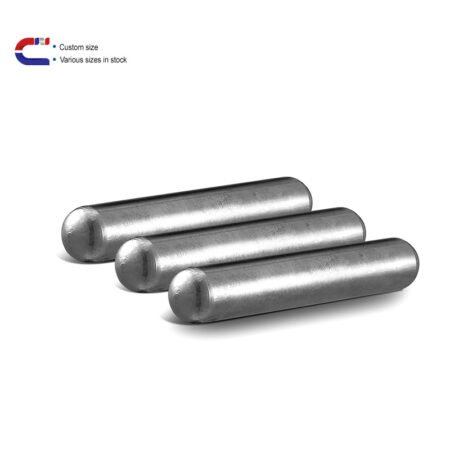
For nearly all applications in cattle health management, a high-quality, encased Ceramic 5 or Ceramic 8 grade cow stomach magnet provides the optimal balance. It offers magnetic power, long-term stability, and economic value.
Key Design Features
Beyond the magnetic material itself, the physical construction of the magnet is paramount to its function and safety.
The most critical feature is the protective casing. This casing must be made of a seamless, non-corrosive, medical-grade material. This is typically stainless steel. A seamless design with rounded and polished ends is vital. It ensures the magnet does not irritate the delicate stomach lining. It also prevents any digestive fluids from reaching the magnetic core.
You will encounter two main designs: the classic smooth, pill-shaped magnet and the more modern caged magnet.
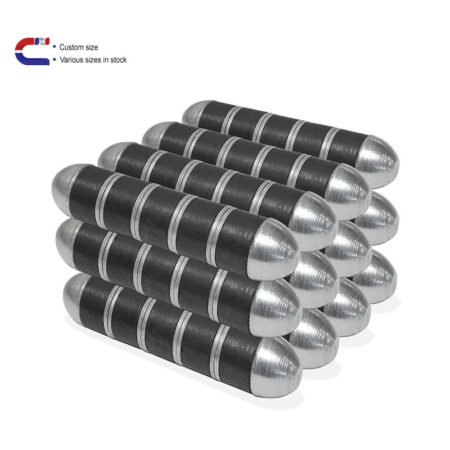
Caged magnets feature a plastic or sometimes metal framework around the core magnet. This cage structure is designed to increase the effective surface area. It provides more edges and crevices. The theory is that these additional contact points make it easier for metal objects to cling to the magnet and stay attached. This potentially increases its overall trapping efficiency.
Smooth, pill-shaped magnets are the original design. They remain highly effective. Their simple, robust construction has been trusted for decades in veterinary practice.
The choice between them often comes down to a balance of proven performance and modern design theory. Both are effective when constructed to high standards.
Feature | Caged Ceramic Magnet | Smooth Ceramic Magnet | Alnico Magnet |
Effectiveness | Excellent | Very Good | Very Good |
Cost | $$ | $ | $$$ |
Durability | Excellent (with quality casing) | Excellent (with quality casing) | Good (casing is critical) |
Industry Standard | Yes, widely used | Yes, classic design | Less common now |
Sizing, Strength, and Recommendations
Cow magnets are manufactured in standard sizes. They’re typically around 3/4 inch in diameter and 3 to 4 inches long. This size is optimized to be easily given with a standard bolus gun. Yet it’s heavy enough to remain securely in the reticulum.
The single most important performance indicator is magnetic strength. This is often measured as “pull force.” A stronger magnet has a greater reach and a more secure hold on captured metal. You should always select a magnet with the highest practical magnetic force from a reputable supplier.
The magnet’s purpose is to act as a permanent, one-time treatment. Therefore, investing in a superior product is a negligible cost when spread over the animal’s entire lifespan. It is not an area where cutting corners provides any long-term value.
For a reliable, industry-proven solution, we recommend exploring a range of high-quality cow magnets that are designed for maximum safety and effectiveness.
Administering a Cow Magnet
Safely and correctly giving a cow stomach magnet is a straightforward procedure. However, it requires proper technique and respect for the animal. Following a precise, step-by-step process ensures the magnet reaches its intended destination. It also prevents stress or injury to the cow or the operator.
Equipment and Preparation
Before you begin, gather all necessary equipment. Having everything ready minimizes the time the animal must be restrained.
You will need:
- The cow stomach magnet itself.
- A proper bolus gun, also known as a balling gun. These are available in both plastic and metal. They should be long enough to reach the back of the cow’s throat.
- A safe and secure cattle restraint, such as a head gate or a well-designed chute. This is non-negotiable for the safety of both you and the animal.
- (Optional but recommended) A small amount of non-toxic, edible lubricant, like mineral oil or a specific veterinary lubricant.
Inspect your equipment. Ensure the bolus gun is clean and operates smoothly. The magnet should be clean and free of any defects.
The Administration Procedure
With the animal secured and your equipment ready, you can proceed with giving the magnet. Work calmly and deliberately.
- Secure the Animal: Ensure the cow’s head is held firmly and calmly within the head gate. The goal is to restrict movement to prevent injury.
- Load the Bolus Gun: Place the cow stomach magnet into the cup at the end of the bolus gun. Applying a small amount of lubricant to the magnet can help it go down more smoothly.
- Position Yourself: Stand safely to the side of the cow’s head. Never stand directly in front of the animal.
- Open the Cow’s Mouth: Gently insert your free hand into the side of the cow’s mouth in the toothless gap (the diastema). Apply firm, steady pressure to the roof of the mouth (the hard palate). This will encourage the cow to open its mouth.
- Insert the Gun: Once the mouth is open, guide the bolus gun over the large muscular base of the tongue. Keep it centered. You must pass the prominent hump at the back of the tongue to ensure the magnet enters the esophagus, not the trachea.
- Give the Magnet: When the gun is properly positioned at the back of the throat, depress the plunger with a smooth, quick motion. This will release the magnet. Do not use excessive force.
- Remove the Gun & Confirm Swallow: Withdraw the bolus gun straight back out of the mouth. Keep the cow’s head level or slightly elevated for a moment. Watch its neck for a clear swallowing motion.
Safety and Pro-Tips
Following best practices is essential for a successful and safe procedure. This is where experience-based knowledge makes a significant difference.
- DO NOT force the bolus gun. If you meet significant resistance, you are not in the right position. Withdraw, reassess, and try again. Forcing the gun can cause severe damage to the soft tissues of the mouth and pharynx.
- AVOID angling the gun to the side. This can injure the cheek or throat. It also increases the risk of the magnet not being swallowed properly. Always aim for the center, over the tongue.
- ENSURE correct placement. The single greatest risk is accidentally placing the magnet into the trachea (windpipe) instead of the esophagus. This is a veterinary emergency. Passing the base of the tongue is the key landmark to avoid this.
- PRO-TIP: Using low-stress cattle handling techniques is crucial. A calm animal is easier and safer to work with. Resources from experts like Dr. Temple Grandin offer invaluable insights into cattle behavior and handling.
- PRO-TIP: After giving the magnet, you can use a stethoscope placed on the cow’s lower left side, just behind the elbow. If the environment is quiet, you can sometimes hear a distinct “clink” as the heavy magnet lands in the reticulum among other contents.
- PRO-TIP: The best time to give a magnet is typically when heifers reach breeding age or during their first pregnancy check. This ensures they are protected before their first calving and for their entire productive life.
Long-Term Magnet Management

Once a cow stomach magnet is given, it becomes a permanent part of the animal’s internal hardware. Understanding its lifespan, efficacy, and long-term implications helps manage expectations. It also reinforces its value as a one-and-done preventative measure.
Cow Magnet Lifespan
This is one of the most common questions from farmers. A high-quality cow stomach magnet lasts the entire lifetime of the animal. This applies to magnets constructed with a stable ceramic core and a seamless stainless steel casing.
The magnetic properties of a modern ferrite magnet do not degrade in any meaningful way over time. This is true even within the biological environment of the reticulum.
Furthermore, the medical-grade stainless steel casing is engineered to be completely resistant to the corrosive digestive fluids in the stomach. The magnet will remain intact and fully functional for decades.
Confirming It Is Working
There is no external indicator or routine test to confirm a magnet is “working.” Its success is demonstrated by what does not happen: the onset of hardware disease.
A cow stomach magnet is a purely preventive tool. Its function is passive prevention, much like a vaccine protects against a future infection. The return on investment is measured in healthy, productive animals. These animals never suffer the pain, lost production, and potential death associated with traumatic reticuloperitonitis.
The only time you might physically confirm its presence is with a metal detector. You might also find it in a post-mortem examination, where you will find the magnet in the reticulum. It’s often covered in a collection of metallic debris it has captured over the years.
Risks and Downsides
When proper products and procedures are used, the risks associated with cows and magnets are exceptionally low.
The primary risks are almost entirely related to improper administration, as detailed in the previous section. Injury to the mouth or throat, or incorrect placement into the trachea, are the most significant concerns. However, these are avoidable with proper training, equipment, and technique.
On very rare occasions, a cow might swallow an overwhelming amount of metal that exceeds the magnet’s capacity to hold it all securely. Likewise, a non-ferrous but sharp object (like aluminum) would not be attracted. However, these scenarios are uncommon. The magnet still provides protection against the vast majority of common metallic threats found on a farm.
The use of magnets is a universally accepted practice that aligns with high standards of animal welfare. It is a humane, preventative action that spares an animal from a painful and debilitating disease. This is consistent with guidelines promoted by organizations like the American Veterinary Medical Association (AVMA) on animal welfare.
.
We are a manufacturer specializing in the research and development of magnets with years of industry experience. Our product offerings include NdFeB magnets, ferrite magnets, and custom magnetic components. Our goal is to provide high-quality magnetic solutions to customers worldwide, and we also offer OEM/ODM customization services. If you have any questions about magnets or custom applications, please feel free to contact our team of experts.
Facebook
Twitter
LinkedIn
WhatsApp