
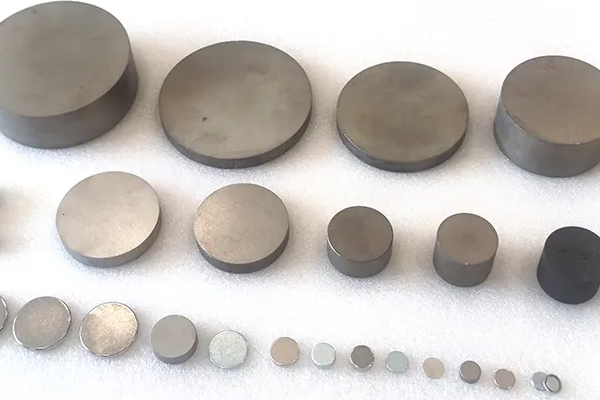
Engineers constantly seek materials that can make or break their projects. For years, they’ve weighed the raw power of Neodymium magnets against the thermal stability of Samarium Cobalt. But what if one material could offer both benefits plus superior corrosion resistance? SMOC Magnets provide exactly that solution.
Understanding this advanced magnetic material gives engineers, R&D professionals, and industrial purchasers a real competitive edge. So what are SMOC magnets exactly? They’re rare-earth permanent magnets made from Samarium, Iron, and Nitrogen (SmFeN). These magnets are known for excellent thermal stability, high magnetic performance, and natural resistance to corrosion.
This guide targets technical professionals who need more than basic definitions. We’ll provide detailed data, comparative analysis, and application insights for your most demanding projects. You’ll learn about core properties, see benchmarks against established materials, and get a practical framework for magnet selection. This ensures you invest in performance, not problems.
Table of Contents
Understanding the Composition
Understanding the Composition
The term “SMOC” can confuse people. The scientifically accurate name is Samarium-Iron-Nitrogen, often shortened to SmFeN. The base compound is Sm₂Fe₁₇. This undergoes a nitrogenation process at high temperatures (around 400-500°C) to form Sm₂Fe₁₇N₃.
This nitrogenation process creates the material’s exceptional properties. Adding nitrogen atoms to the samarium-iron alloy’s crystal structure does two important things:
- Expands the Crystal Lattice: This expansion greatly increases the material’s magnetocrystalline anisotropy. Simply put, it makes the material much more resistant to demagnetization by external magnetic fields. This is essential for strong permanent magnets.
- Raises the Curie Temperature: The process increases the temperature at which the material loses its permanent magnetism. This gives superior thermal stability compared to Neodymium magnets.
The Manufacturing Hurdle
SMOC magnets face a unique production challenge. Unlike Neodymium (NdFeB) or Samarium Cobalt (SmCo) magnets, which come in both sintered and bonded forms, SMOC magnets are almost always produced as bonded magnets.
Sintering compacts magnet powder at very high temperatures. This creates a dense, solid block with the highest possible magnetic energy. However, the Sm₂Fe₁₇N₃ compound breaks down at sintering temperatures. It decomposes back into SmN and Fe. This fundamental challenge has largely prevented commercial production of fully dense, sintered SMOC magnets.
Bonding takes a different approach. It mixes SmFeN magnet powder with a polymer binder like epoxy, nylon, or PPS. This mixture can be processed at much lower temperatures through compression molding, injection molding, or calendering.
Bonded magnets have lower magnetic energy product (BHmax) than their sintered counterparts would have. But this process offers significant advantages. It allows creation of highly complex shapes with tight tolerances. It also combines SmFeN’s magnetic properties with the mechanical and chemical properties of the binder.
Core Properties of SMOC Magnets
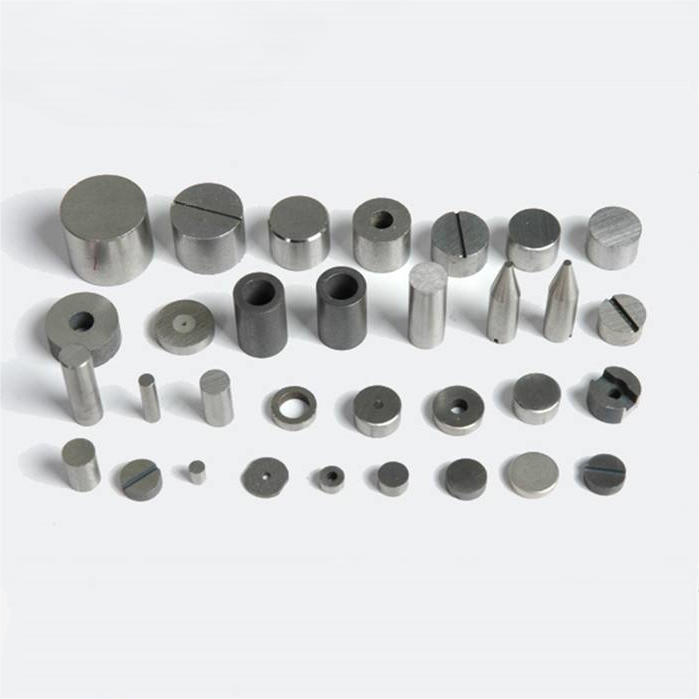
Understanding key performance metrics is essential for properly evaluating SMOC magnets. These properties set them apart and define their ideal use cases in demanding industrial and technological applications.
Magnetic Strength (BHmax)
Maximum Energy Product, measured in MegaGauss-Oersteds (MGOe), represents stored magnetic energy in a magnet. It’s the primary indicator of magnet strength.
Bonded SMOC Magnets typically show BHmax in the 10 to 18 MGOe range.
This is lower than high-grade sintered Neodymium magnets (which can exceed 50 MGOe). But it’s significantly stronger than Ferrite magnets (around 4 MGOe). It’s also comparable to or better than many grades of bonded Neodymium and sintered Samarium Cobalt magnets. The value comes from achieving this strength level combined with other superior properties.
Superior Thermal Stability
This is arguably the most compelling property of SMOC magnets. Two parameters matter most:
- Curie Temperature (Tc): This is the temperature at which the magnet fully demagnetizes. SMOC magnets have a Curie Temperature of approximately 470°C (878°F). This is much higher than standard NdFeB magnets (around 310°C) and comparable to high-temperature SmCo magnets.
- Temperature Coefficient of Remanence (αBr): This measures how much magnetic field strength decreases as temperature increases. SMOC magnets have an excellent (low) temperature coefficient, typically around -0.07% / °C. They maintain magnetic strength far better at elevated temperatures than NdFeB magnets (which are closer to -0.12% / °C).
This combination makes SMOC magnets ideal for high operating temperature applications where consistent magnetic performance is non-negotiable.
Excellent Corrosion Resistance
Raw Neodymium magnets are notorious for oxidation and rust. They almost always require protective coating like Nickel-Copper-Nickel or epoxy. This adds cost, complexity, and potential failure points if coating gets compromised.
SMOC (SmFeN) powder has outstanding natural corrosion resistance. The material is inherently stable and doesn’t readily oxidize, even in humid or saline environments. This means SMOC magnets can often be used without protective coating in many applications. This leads to:
- Reduced Costs: Eliminates coating process expenses.
- Simplified Design: No need to account for coating thickness in tight-tolerance assemblies.
- Enhanced Reliability: Removes risk of performance degradation from coating failure.
Other Key Properties
Engineers must also consider mechanical and physical characteristics for a complete picture:
- Density: Approximately 6.0 to 6.5 g/cm³, depending on binder ratio. This is lower than both NdFeB (~7.5 g/cm³) and SmCo (~8.4 g/cm³). This makes SMOC magnets advantageous in weight-sensitive applications.
- Mechanical Properties: As bonded magnets, their mechanical strength, flexibility, and impact resistance depend largely on the polymer binder used. This allows customization—for example, using PPS binder for higher temperature and chemical resistance or nylon binder for better impact strength.
SMOC Magnets vs. The Competition
Theoretical properties are useful, but engineering decisions often come down to direct comparisons with existing, trusted materials. This section provides head-to-head analysis to help determine if SMOC is the right upgrade for your application.
Permanent Magnet Comparison
This table summarizes key trade-offs between SMOC and other common permanent magnets for quick overview.
Property | Bonded SMOC (SmFeN) | Sintered NdFeB | Sintered SmCo | Sintered Ferrite |
Max Energy Product (BHmax) | Good (10-18 MGOe) | Excellent (35-55 MGOe) | Good (18-32 MGOe) | Low (3-5 MGOe) |
Max Operating Temperature | Excellent (~200°C) | Fair (~80-200°C) | Excellent (250-350°C) | Good (250°C) |
Curie Temperature (Tc) | Excellent (~470°C) | Low (~310°C) | Excellent (700-800°C) | Good (~450°C) |
Corrosion Resistance | Excellent (No Coating) | Poor (Coating Required) | Excellent (No Coating) | Excellent (No Coating) |
Temp. Coefficient (Br) | Excellent (~ -0.07%/°C) | Fair (~ -0.12%/°C) | Excellent (~ -0.03%/°C) | Poor (~ -0.20%/°C) |
Relative Cost | Medium-High | Medium | High | Low |
Mechanical Strength | Good/Variable (Polymer) | Fair (Brittle) | Fair (Brittle) | Fair (Brittle) |
SMOC vs. Neodymium (NdFeB)
This is the most common comparison. Neodymium magnets are the industry workhorse. They’re prized for unmatched magnetic strength-to-cost ratio at room temperature.
- Choose NdFeB when: Your primary need is maximum magnetic force in minimal space. The operating environment must be temperature-controlled and non-corrosive.
- Choose SMOC when: Your application involves elevated temperatures (above 120°C), requires stable magnetic output across temperature ranges, or operates in humid/corrosive environments where coating failure is a concern. SMOC provides a “de-risked” solution for high-reliability systems.
SMOC vs. Samarium Cobalt (SmCo)
Samarium Cobalt magnets have long been the go-to material for high-temperature applications.
- Choose SmCo when: Your application requires operation at extreme temperatures (above 250°C). SmCo’s superior Curie temperature and stability are unmatched here.
- Choose SMOC when: Your application operates in the “middle-ground” of high temperatures (e.g., 150-200°C). SMOC can offer comparable or sufficient thermal performance. It adds benefits of being Cobalt-free (cost and supply chain advantage) and having design flexibility of bonded magnets.
SMOC vs. Ferrite
Ferrite magnets are inexpensive but magnetically weak. SMOC is a significant performance upgrade.
Choose SMOC when: You need to miniaturize a design that currently uses bulky ferrite magnets. SMOC offers dramatic increases in magnetic strength. This allows smaller, lighter, and more efficient components that aren’t feasible with ferrite.
Key Application Areas
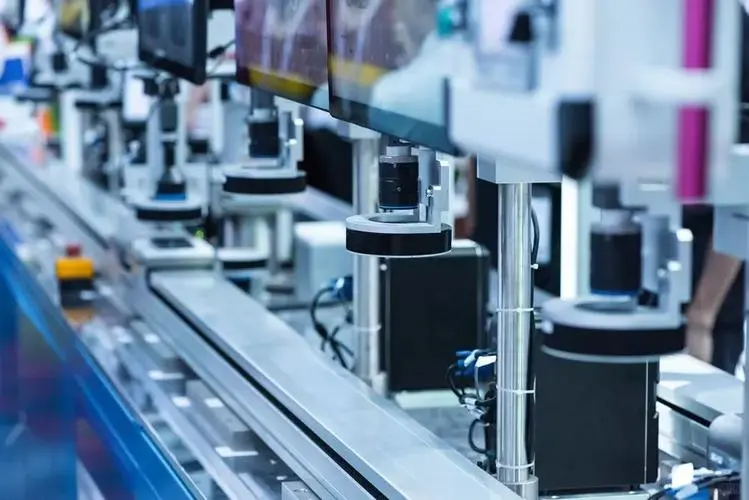
The unique combination of thermal stability, corrosion resistance, and good magnetic strength makes SMOC magnets problem-solvers for a range of advanced applications of magnets.
High-Performance Motors
This is a primary application area. In modern motors, especially brushless DC (BLDC) and servo motors, efficiency and stable performance under load are critical.
Why SMOC? Motors generate heat. As standard NdFeB magnets heat up, their efficiency drops. SMOC’s low temperature coefficient ensures motors maintain torque and performance characteristics even when hot. Its corrosion resistance is also a major benefit for automotive under-hood components (e.g., electronic power steering, pumps) or industrial motors exposed to harsh conditions.
Advanced Sensors and Couplings
Sensors require stable, predictable magnetic fields for accurate measurements. Magnetic couplings transmit torque without physical contact, often in sealed systems.
Why SMOC? In automotive sensors (e.g., wheel speed, crankshaft position) or industrial process sensors, temperature fluctuations can cause measurement drift. SMOC’s thermal stability provides reliable and consistent magnetic fields. This leads to more accurate sensor readings. For magnetic couplings used in chemical pumps, its inherent corrosion resistance eliminates risk of magnet failure from exposure to aggressive fluids. This is a critical reliability advantage.
Electronics and Audio
Miniaturization constantly drives electronics development.
Why SMOC? While NdFeB dominates here, SMOC finds a niche in high-performance devices where heat is a factor. For example, in high-end loudspeaker voice coils or compact, high-power actuators in portable devices, SMOC can provide consistent performance where heat buildup might degrade NdFeB magnets. The ability to injection mold complex shapes is also a significant advantage for intricate electronic assemblies.
A Practical Sourcing Guide
Knowing theory is one thing; implementing it is another. Successfully integrating a new material like SMOC requires a systematic approach in our experience. Here’s a practical guide for engineers and procurement managers.
Key Questions to Ask
Answer these four critical questions before you begin. This creates your project’s “magnetic profile”:
- What is the true maximum operating temperature? Be realistic and include a safety margin. If it’s consistently above 150°C, SMOC is a very strong candidate.
- Will the magnet be exposed to moisture, chemicals, or saline atmosphere? If yes, SMOC’s intrinsic corrosion resistance can significantly simplify your design and improve long-term reliability.
- What are the magnetic field requirements? Do you need absolute maximum strength of sintered NdFeB, or is high-grade bonded magnet performance sufficient? Don’t over-specify and over-pay.
- What are the physical constraints? Is the shape complex? Do you need tight tolerances? The flexibility of bonded SMOC magnets allows net-shape manufacturing. This can reduce or eliminate costly post-processing.
Grades and Customization
“SMOC Magnet” isn’t a single material but a family. Final properties depend on the SmFeN powder itself and, crucially, the type and percentage of binder used.
- PPS (Polyphenylene Sulfide) binders offer the highest temperature and chemical resistance.
- PA12 (Nylon) binders provide better mechanical strength and flexibility.
- Epoxy binders offer good all-around balance of properties.
Partnership with a knowledgeable supplier is critical here. An expert can help you engineer a custom compound that precisely balances magnetic performance, thermal resistance, and mechanical durability for your specific needs. If your project requires a unique shape or performance profile, exploring custom magnets is the most effective path forward.
The Future of SMOC
The journey of SMOC magnets is far from over. While they’ve already carved out a crucial niche, their future potential is even greater. The primary focus of ongoing research is overcoming the sintering challenge.
A commercially viable method for producing fully dense, sintered SMOC magnets would be a true game-changer. It could potentially create a material with NdFeB’s strength and the thermal and corrosion resistance of SmCo.
Furthermore, as global supply chains face pressure and demand for high-performance, cobalt-free magnets grows, SmFeN materials are positioned as strategically important alternatives.
Their development is part of a broader push towards more sustainable and resilient magnet technology. As manufacturing techniques mature and costs potentially decrease, we expect SMOC magnets to be adopted in even wider arrays of mainstream applications. This includes electric vehicles to next-generation robotics.
Conclusion: The Smart Choice
SMOC magnets represent significant advancement in permanent magnet technology. They’re not a universal replacement for NdFeB, but rather a specialized solution for engineering problems where others fall short.
They offer a powerful combination of good magnetic strength, exceptional thermal stability, and inherent corrosion resistance. This provides high-reliability solutions for critical applications in motors, sensors, and electronics. Their unique properties, especially in bonded form, allow design freedoms and performance assurances that are difficult to achieve with traditional materials.
When your project demands performance under heat and in harsh environments, SMOC magnets are no longer just an alternative. They are the intelligent choice.
If you’re evaluating magnetic materials for a new or existing project and need expert guidance, our team of engineers is ready to help. Contact us today to discuss your specific requirements and explore how SMOC magnets can elevate your design.
We are a manufacturer specializing in the research and development of magnets with years of industry experience. Our product offerings include NdFeB magnets, ferrite magnets, and custom magnetic components. Our goal is to provide high-quality magnetic solutions to customers worldwide, and we also offer OEM/ODM customization services. If you have any questions about magnets or custom applications, please feel free to contact our team of experts.
Facebook
LinkedIn
WhatsApp
Twitter