



China magnet factory-cnmmagnet.com

Everyday Uses of Countersunk Rare Earth Magnets

Have you ever been bothered by loose furniture, messy tools, or the disassembly of electronic products? Countersunk rare-earth magnets may be the solution you’ve never noticed. Unlike traditional magnets, it allows screw fixation through its countersunk design, enabling a concealed yet powerful magnetic connection. Today, we’ll delve into its diverse applications and share how this small tool can make your life more efficient and organized.

Table of Contents

What is a Countersunk Rare Earth Magnet?

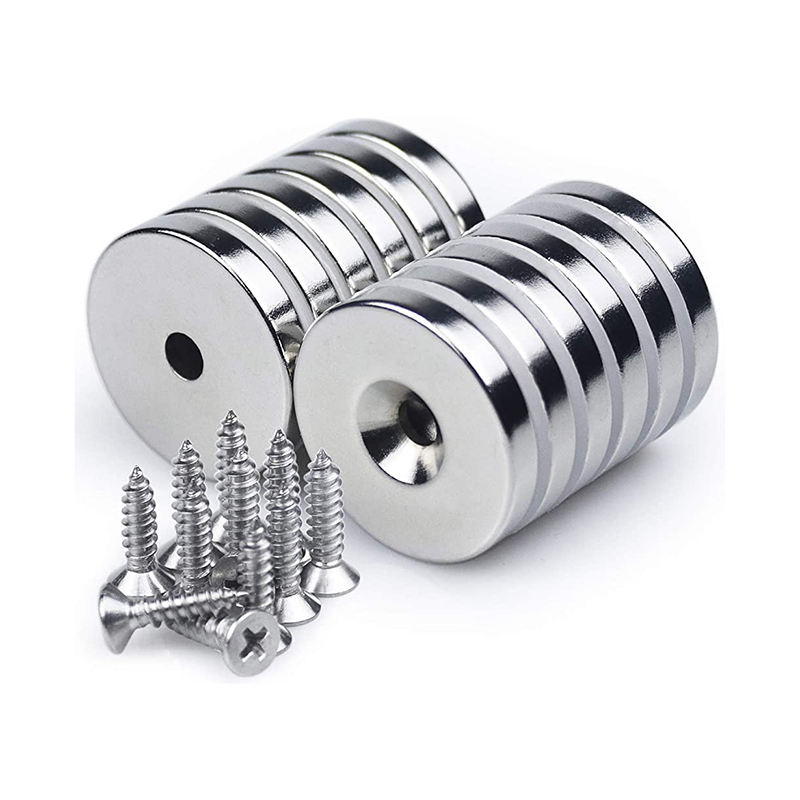
Countersunk magnets refer to magnets (usually neodymium magnets) with conical countersunk holes, which can be directly fixed to the surface of an object by screws. This design not only enhances stability but also allows the magnet to be “hidden” inside the material, resulting in a simple and safe appearance. Their ultra-high magnetic force (due to rare earth materials) makes them suitable for heavy-load scenarios, while the countersunk hole structure avoids the problem of ordinary magnets easily falling off.
Core Advantages:
  • Concealed Installation : Perfectly embedded in wood, metal, or plastic without compromising aesthetics.
  • Super Strong Fixation: Rare earth material provides suction force and can withstand kilogram-level weight.
  • Flexible Adaptation : Compatible with standard screws, suitable for DIY and industrial scenarios.

Home Organization: Say Goodbye to Clutter

  1. Fixing the Cabinet and Door Catch Embed countersunk magnets inside the cabinet or wardrobe door to replace traditional door catches or hinges. When the door is closed, it automatically attracts, preventing the door panel from loosening or making noise. For example, installing a pair of magnets in a kitchen cabinet can prevent children from easily opening it, enhancing safety.
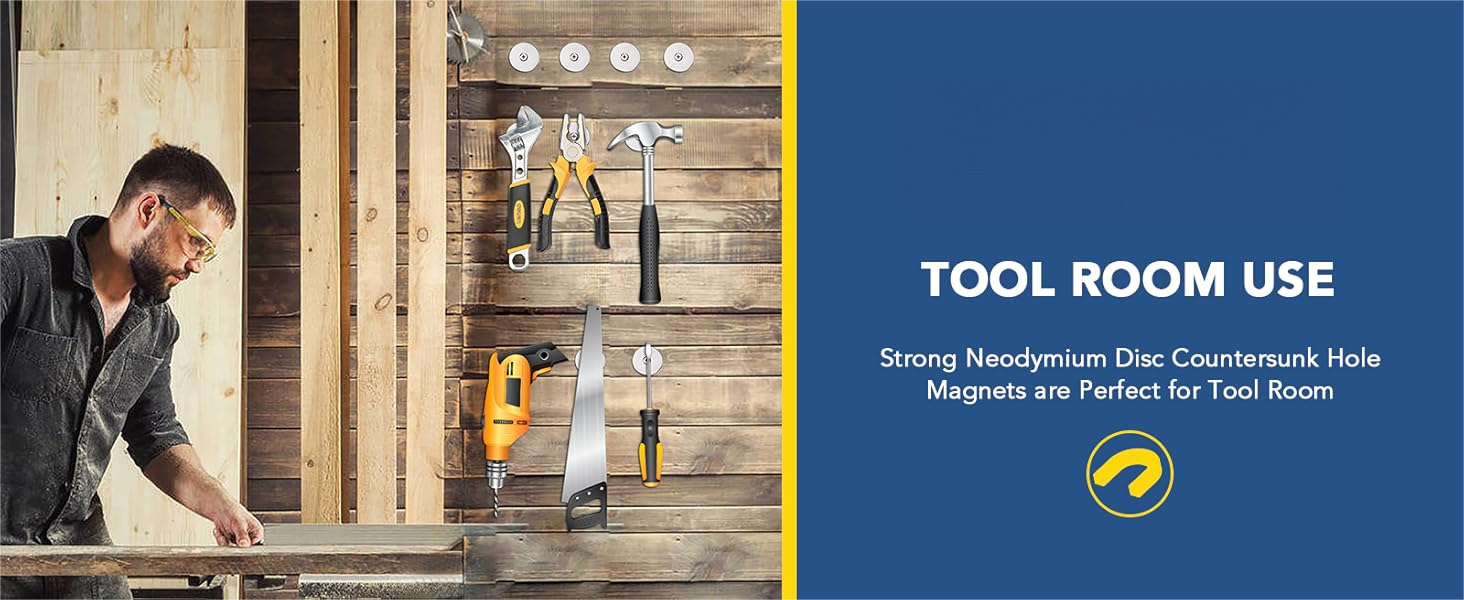
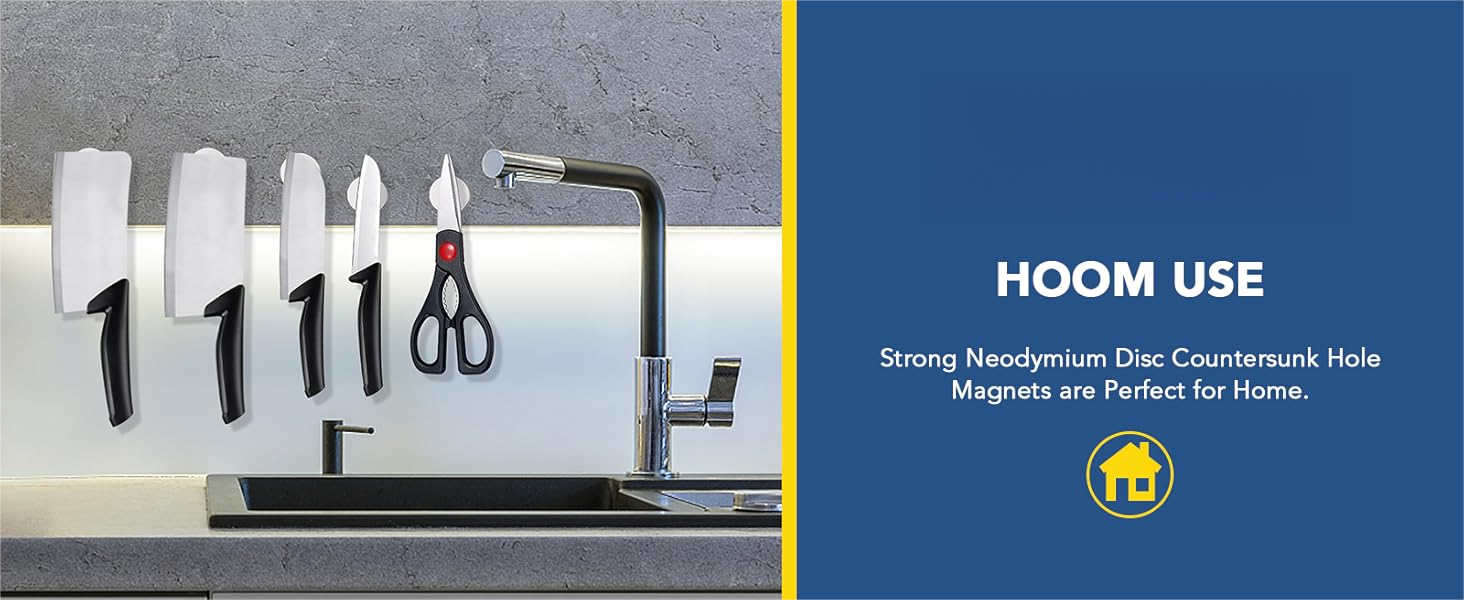
  2. Tool Wall and Hook System Fix magnets on the wall or tool board, then attach metal hooks to create a flexible tool rack. No drilling is required when adjusting the position, making it especially suitable for garages or workshops.
  3. Hidden Furniture Assembly Spliced furniture (such as bookshelves and tables) commonly uses screws for connection, but it is prone to loosening after long-term use. By adding countersunk magnets at the joints, the furniture is fixed with both magnetic attraction and screws, enhancing stability without the need for exposed parts.

DIY and Creative Projects

  1. Magnetic Display Rack By embedding magnets on the back of photo frames or display boards, it can be attached to metal walls, allowing for easy switching of decorative paintings or photos without the need for nail holes. Suitable for renters or art enthusiasts.
  2. Detachable children’s toys Use magnets to connect building blocks or model parts, allowing children to assemble and disassemble safely (avoiding accidental ingestion of small parts). For example, wooden train tracks are connected by magnets, making them more stable and highly engaging.
  3. Concealed Door Latch and Hidden Box Magnets are installed in concealed storage boxes or secret drawers as a switching mechanism. They automatically attract when closed, with a seamless and mysterious appearance—just like a prop in a movie!
Professional Tip: When doing DIY, it is recommended to prioritize the use of nickel-plated magnets, which are corrosion-resistant and have a more refined appearance. During installation, ensure that the countersunk holes fit perfectly with the screw heads to avoid stress concentration.

Industrial and Electronic Applications

  1. Electronic Product Repair and Assembly Mobile phones and laptops commonly use magnets to secure the housing or accessories (such as Apple MagSafe). The countersunk design allows for precise installation, preventing magnet displacement from affecting functionality. During repair, magnets of the same specification can be used for replacement, reducing costs.
  2. Automobile accessory fixation On-board GPS, phone holders, or decorative pieces can be magnetically attached to the dashboard. The countersunk hole design withstands vibrations and is less likely to fall off during driving.
  3. Industrial Fixtures and Equipment In machine tools or 3D printers, magnets are used to secure workpieces or sensors. The strong suction force of rare earth magnets combined with screw fixation is suitable for high-precision scenarios.
Case Sharing: A certain automobile factory uses countersunk magnets to secure wiring harnesses, increasing installation efficiency by 30% and avoiding the wear issues associated with traditional cable ties.

How to choose and install?

How to choose and install
  1. Selection Guide
    1. Size: Select the diameter and thickness based on the load (e.g., a magnet with a 10mm diameter can hold a weight of 1-2kg).
    2. Material: Neodymium magnets (NdFeB) have the strongest magnetic force but require plating to prevent rust; ceramic magnets have low cost but weak magnetic force.
    3. Countersink Angle : Usually 90° or 100°, matching standard screw heads.
          2. Installation Steps
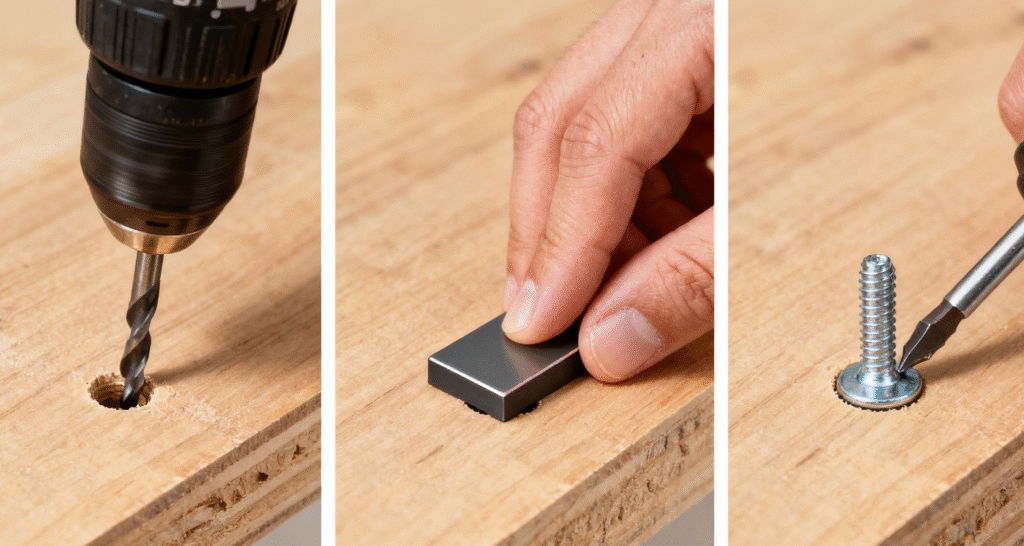
    1. Drilling: Drill a hole with the same diameter as the outer diameter of the magnet in the target material, and machine a countersunk cone hole.
    2. Fixation: Place the magnet into the hole and tighten it with a screw from the back (avoid excessive force that may cause the magnet to break).
    3. Test: Adsorb the metal part and check its stability.
Caution to Avoid Pitfalls: Magnets are fragile, avoid hitting them with a hammer; keep them away from electronic products (such as credit cards and watches) to prevent demagnetization.

Future Trends: Innovation Potential of Magnets

From smart home devices to medical apparatus, countersunk magnets are becoming the key to “invisible technology”. For example:
  • Adjustable magnetic hinge: Used for foldable screen devices or furniture.
  • Medical Implant Devices: Magnets secure prosthetics or surgical tools, reducing invasive procedures. The integrated design of magnets is redefining the way we “connect” – it is not just a tool, but a philosophy that simplifies life.

Conclusion

The charm of countersunk magnets lies in their ability to solve complex fixing problems with minimal physical principles. Whether you’re a home organizer, DIY enthusiast, or engineer, you can find inspiration from them. Next time you’re faced with the trouble of looseness or clutter, ask yourself: “Could a hidden magnet be needed here?”
We are a manufacturer specializing in the research and development of magnets with years of industry experience. Our product offerings include NdFeB magnets, ferrite magnets, and custom magnetic components. Our goal is to provide high-quality magnetic solutions to customers worldwide, and we also offer OEM/ODM customization services. If you have any questions about magnets or custom applications, please feel free to contact our team of experts.
Facebook
Twitter
LinkedIn
WhatsApp
Leave a Reply

Your email address will not be published. Required fields are marked *

Select the fields to be shown. Others will be hidden. Drag and drop to rearrange the order.
  • Image
  • SKU
  • Rating
  • Price
  • Stock
  • Availability
  • Add to cart
  • Description
  • Content
  • Weight
  • Dimensions
  • Additional information
Click outside to hide the comparison bar
Compare

Contact Us

FIll out the form below and we will cantact you as soon as possible