
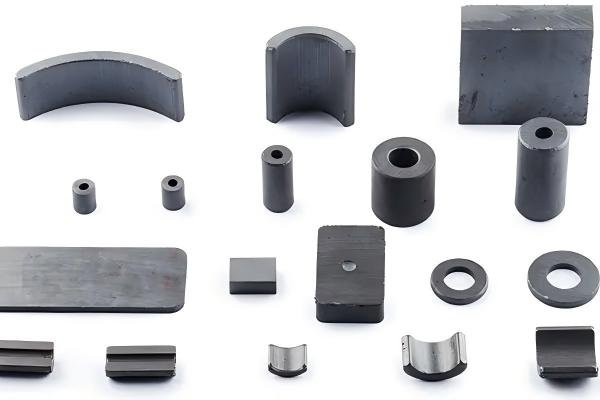
Comprehensive Guide to Ferrite Magnets: From Grade Analysis to Application Selection
Have you ever felt confused when choosing ferrite magnets? Faced with different grades such as Y30 and Y35, are you unsure which one is most suitable for your project? Don’t worry, this article will resolve all your doubts! As a seasoned professional in the magnetic materials field, I understand the importance of choosing the right magnet grade – it not only affects performance but also directly impacts the success or failure of the product.
Why are ferrite magnets so popular?
Ferrite magnets (also known as ceramic magnets), since their introduction in the 1950s, have become one of the most widely used permanent magnet materials due to their high cost-effectiveness, excellent corrosion resistance, and stable chemical properties . Although their magnetic energy product is not as high as that of NdFeB magnets, their low cost and high resistance to demagnetization make them irreplaceable in many industrial fields.
1. Comprehensive Analysis of Ferrite Magnet Grades
According to international standards, ferrite magnets are mainly divided into two major categories: isotropic and anisotropic, with each category containing multiple grades:
Anisotropic ferrite magnet (oriented crystallization)
These magnets are oriented by a magnetic field during the manufacturing process, have a clear magnetization direction, and exhibit superior magnetic properties:
- Y30: Basic grade, residual magnetic flux density Br ≈ 380 – 400 mT, coercivity HcB ≈ 240 – 250 kA/m
- Y30BH: High coercivity version with better high-temperature resistance
- Y33: General Grade, Br≈400-420mT
- Y35: High-performance grade, Br≈420-440mT
- Y40: Ultra-high performance, Br≈440-460mT
Isotropic Ferrite Magnet (Non-oriented)
Magnetic particles are randomly oriented, can be magnetized in any direction, but have lower magnetic properties:
- C5: Basic grade, Br≈200mT
- C8: Improved version, Br≈230mT
Professional Tip: Most industrial applications choose anisotropic magnets because their magnetic properties are 2-3 times higher!
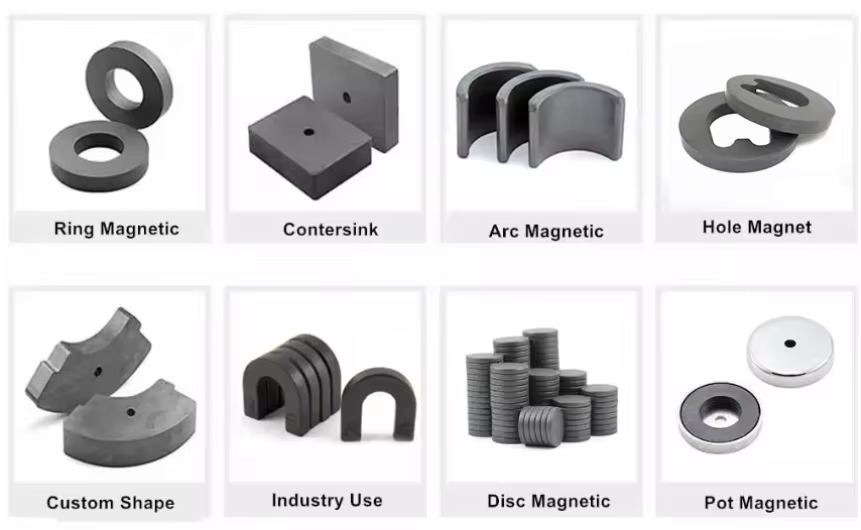
How to Choose the Right Magnet Grade? (Solving the User’s Core Problem)
When selecting the magnet grade, four key factors need to be considered:
- Operating Temperature Requirements
- Standard Rating: Applicable from -40°C to +250°C
- High-temperature Application: Select high-compaction density grades such as Y30BH
- Magnetic Performance Requirements
- High Flux Application: Select high Br grades such as Y35, Y40, etc.
- High Demagnetization Resistance Requirement: Select High HcB Grade
- Cost Consideration
- Y30: Lowest cost, suitable for applications with low performance requirements
- Y35: Optimal cost-performance ratio, ideal for most applications
- Y40: Highest performance, with correspondingly increased cost
- Size Limit
In space-constrained application areas, a higher level may be required to meet performance requirements
My Practical Advice: For most applications, Y35 offers the best performance-to-price ratio. However, when the operating environment temperature exceeds 200°C, it is essential to choose Y30BH or a higher coercivity grade.
Guide to Practical Application Scenarios
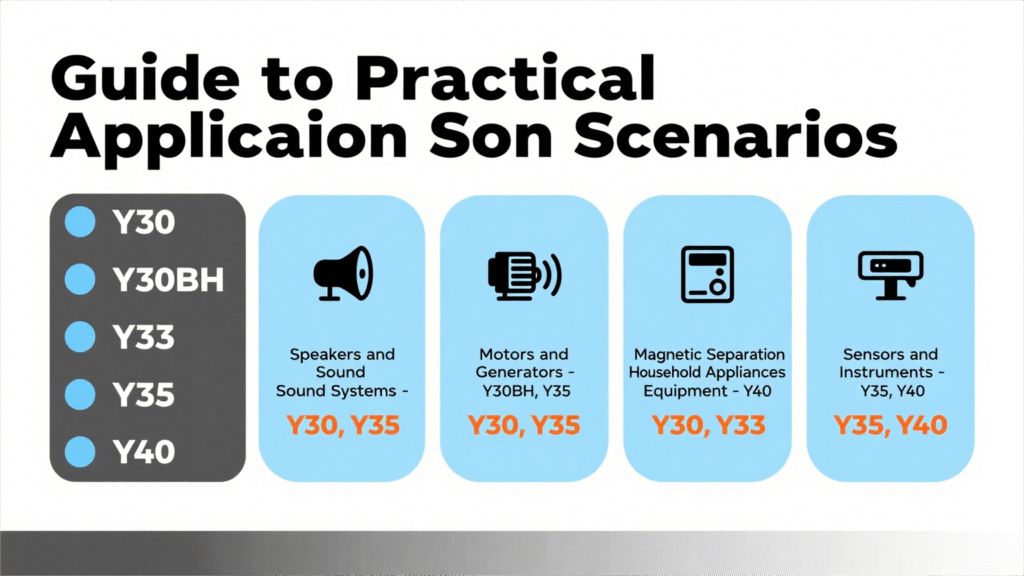
Based on my experience, ferrite magnets of different grades have their most suitable Application Areas:
- Speakers and Sound Systems: Y30 and Y35 are the most common choices, providing sufficient magnetic flux and stability
- Motors and Generators : Y30BH and Y35 are the preferred choices because their high coercivity can resist the reverse magnetic field of motors
- Magnetic Separation Equipment : High-grade magnets such as Y40 can provide stronger magnetic field force
- Household Appliances : Y30 and Y33 are widely used for their cost-effectiveness
- Sensors and Instruments : Select Y35 or Y40 based on accuracy requirements
Performance Comparison Table (A Clear and Concise Selection Tool)
| Level | Remanence Br (mT) | Coercivity HcB (kA/m) | Intrinsic Coercivity HcJ (kA/m) | Maximum Energy Product (BH)max (kJ/m³) | Operating Temperature |
| Y30 | 380-400 | 240-250 | 250-300 | 26-30 | ≤250℃ |
| Y33 | 400-420 | 250-260 | 260-320 | 30-33 | ≤250℃ |
| Y35 | 420-440 | 260-280 | 280-350 | 33-36 | ≤250℃ |
| Y30BH | 380-400 | 240-250 | 320-380 | 26-30 | ≤300℃ |
| Y40 | 440-460 | 280-300 | 280-350 | 36-40 | ≤250℃ |
Expert Usage Recommendations and Precautions
- Magnetization direction is crucial: Anisotropic magnets can only be magnetized along the orientation direction, so be sure to pay attention during design
- Avoid mechanical stress : Ferrite has high magnetic brittleness and is not resistant to impact and bending stress
- Operating Point Design: It is recommended to operate in the range of magnetic permeability coefficient Pc = 2 – 3 to achieve optimal performance
- Temperature Coefficient : Remember that the Br temperature coefficient of ferrite magnets is -0.2%/K, and the impact of temperature changes should be considered during design
- Anticorrosion Treatment: Although ferrite itself is corrosion-resistant, surface protection is still required in extreme environments
Conclusion: The Short Step from Novice to Expert
Selecting the correct ferrite magnet grade is not complicated, but it requires systematic thinking. Through the introduction in this article, I believe you already have a clear understanding of how to choose the appropriate ferrite magnet grade.
Remember, there is no “best” grade, only the “most suitable” grade. When you next need to select a magnet, feel free to return to this article and match it against your application requirements, and you will surely find the most suitable solution.
Do you have any questions about magnet selection? Feel free to leave a message in the comments section, and I will personally answer them for you!
We are a manufacturer specializing in the research and development of magnets with years of industry experience. Our product offerings include NdFeB magnets, ferrite magnets, and custom magnetic components. Our goal is to provide high-quality magnetic solutions to customers worldwide, and we also offer OEM/ODM customization services.If you have specific procurement requirements, welcome to contact professional magnet manufacturers for quotes and technical support.
Facebook
Twitter
LinkedIn
WhatsApp