

No, pure gold does not stick to magnets. Scientists have measured gold’s volume magnetic susceptibility at about -3.44 × 10⁻⁵ at 20°C, which shows that gold is diamagnetic and weakly repels magnetic fields. Advanced techniques such as SQUID magnetometry and X-ray magnetic circular dichroism confirm this property. Some gold jewelry may react to magnets because it contains other metals that are magnetic. Understanding how gold stick magnets work helps people test if their gold is real or fake.
Key Takeaways
Pure gold does not stick to magnets because it is diamagnetic and weakly repels magnetic fields.
Gold alloys with metals like nickel, cobalt, or iron can stick to magnets due to their magnetic properties.
Using a strong neodymium magnet helps test if gold is pure or mixed with magnetic metals.
The magnet test alone cannot confirm gold authenticity; combining it with acid tests and professional checks improves accuracy.
Always seek professional evaluation for valuable or unclear gold items to avoid mistakes.
Gold Stick Magnets

Pure Gold & Magnets
Pure gold does not stick to magnets. This property makes gold stick magnets a useful tool for testing jewelry and coins. When someone brings a magnet close to a piece of pure gold, the gold will not move or show any attraction. Scientists have measured this effect in laboratories. They found that pure gold is diamagnetic, which means it actually repels magnetic fields, but so weakly that most people cannot notice it without special equipment.
To help compare the magnetic response of pure gold and gold alloys, researchers have created a table with key measurements:
Parameter | Pure Gold (Au) | Gold-Nickel Alloy (10% Ni) | Gold-Cobalt Alloy |
|---|---|---|---|
Magnetic Susceptibility | Approximately +1.0 × 10⁻⁶ (very weak diamagnetism) | Much higher than pure gold due to nickel | High, ferromagnetic at room temperature |
Coercivity | Negligible | Higher than pure gold | Relatively high |
Saturation Magnetization | Essentially zero | Significant magnetic moment | Large saturation magnetization |
Curie Temperature | No magnetic transition | Decreases with more gold | Ferromagnetic below Curie temperature |
Note: Pure gold’s weak diamagnetism comes from its atomic structure. When gold is mixed with metals like nickel or cobalt, the magnetic response increases. This is why gold stick magnets can sometimes detect fake or low-purity gold items.
Experiments show that gold alloys with ferromagnetic metals, such as nickel or cobalt, react strongly to magnets. In contrast, pure gold remains unaffected. This difference helps people use gold stick magnets to check if a piece of jewelry contains only gold or if it has other metals mixed in.
Why Gold Is Non-Magnetic
Gold is non-magnetic because of its unique atomic structure. Each gold atom has 79 electrons arranged in a way that all electrons are paired. This electron pairing means there are no unpaired electrons to create a magnetic field. The electron configuration for gold ([Xe] 4f14 5d10 6s1) fills all the lower energy levels, leaving no unpaired electrons in the outer shells.
Gold atoms have no unpaired electrons, so they cannot create magnetic dipole moments.
The lack of unpaired electrons means gold does not have a magnetic moment.
Gold’s crystal structure and atomic arrangement also support its non-magnetic nature.
Pure gold does not generate a magnetic field and is classified as diamagnetic, not ferromagnetic.
Metals like iron, nickel, and cobalt are ferromagnetic because they have many unpaired electrons. These unpaired electrons align to create strong magnetic fields. Gold, on the other hand, cannot be magnetized because of its electron pairing. This atomic property explains why gold stick magnets do not attract pure gold.
Researchers have studied gold alloys for decades. They found that adding metals like iron, nickel, or cobalt changes the magnetic properties. For example:
Gold-iron alloys can show ferromagnetism or spin-glass states, depending on the amount of iron.
Gold-nickel and gold-cobalt alloys have much higher magnetic susceptibility than pure gold.
The magnetic reaction of these alloys depends on the concentration and arrangement of the added metal.
Gold stick magnets work best for detecting pure gold because of these atomic and magnetic differences. However, they may not always give a clear answer if the gold item contains only small amounts of magnetic metals.
Gold Alloys & Magnets
Common Alloy Metals
Jewelers rarely use pure gold for jewelry because it is soft and scratches easily. They often mix gold with other metals to improve its strength and durability. These mixtures are called gold alloys. The most common metals added to gold include copper, silver, nickel, and zinc. Each metal changes the color, hardness, and sometimes the magnetic properties of the final product.
Nickel and cobalt stand out among these metals. Scientists have found that adding nickel or cobalt to gold can change its magnetic behavior. For example, X-ray magnetic circular dichroism experiments show that gold mixed with nickel or cobalt can develop weak magnetic properties. Iron also plays a role. When gold is alloyed with iron, the resulting material can show clear magnetic ordering. This means that gold alloys containing nickel, cobalt, or iron may react to magnets, unlike pure gold.
Tip: If a gold item reacts to a magnet, it likely contains one or more of these magnetic metals.
When Alloys Stick
Lower karat gold, such as 10k, 14k, or 18k, contains less pure gold and more alloying metals. The karat number tells how much gold is present. For example, 14k gold has about 58% gold and 42% other metals. If these other metals include nickel, cobalt, or iron, the gold alloy may stick to a magnet.
Experimental studies confirm this effect. When about 20% of gold is replaced with a magnetic metal like iron, the alloy can become magnetic. Jewelry made from these alloys may show weak attraction to magnets. This does not mean the jewelry is fake, but it does mean the gold is not pure. The presence of nickel, cobalt, or iron explains why some gold jewelry, especially white gold, can stick to magnets.
Pure gold: does not stick to magnets.
Gold alloys with nickel, cobalt, or iron: may show magnetic attraction.
Lower karat gold: more likely to react to magnets due to higher content of alloying metals.
Understanding which metals are in a gold alloy helps people interpret magnet test results more accurately.
Magnet Test Steps

How to Test Gold
Testing gold with a magnet offers a quick way to screen for authenticity. Scientists recommend using a strong neodymium magnet, as weaker magnets like those found on refrigerators do not provide reliable results. The following steps outline the process:
Select a neodymium magnet for the test. Rare earth magnets work best because of their strong magnetic pull.
Hold the gold item in one hand and bring the magnet close to its surface.
Observe if the gold item moves toward the magnet or sticks to it.
For a more advanced check, place the gold item on a flat surface at a 45-degree angle. Let the magnet slide down the surface. Pure gold will cause the magnet to slide slowly due to its weak diamagnetic properties.
Avoid testing items with visible springs, clasps, or rods, as these parts may contain magnetic metals and give misleading results.
Use the magnet test as a first step. Combine it with other methods for a more accurate assessment.
Tip: Keep a neodymium magnet in your toolkit for quick, non-destructive gold screening.
Interpreting Results
The magnet test provides useful clues about gold authenticity, but it does not offer absolute proof. Here is how to interpret the outcomes:
Pure gold does not react to magnets. If the item shows no attraction, it may be genuine.
If the gold item sticks to the magnet, it likely contains ferromagnetic metals such as iron or nickel. This suggests the item is either a gold alloy or not real gold.
Some gold-plated or counterfeit items use non-magnetic metals. These pieces may pass the magnet test even though they are not pure gold.
Gold jewelry sometimes includes magnetic components in clasps or fasteners. These parts can cause a false positive.
The magnet test works best as a preliminary check. Reliable authentication requires additional tests, such as acid testing or professional evaluation.
Note: The magnet test helps identify obvious fakes, but only a combination of tests can confirm real gold.
Magnet Test Limits
False Results
The magnet test offers a fast way to check gold, but it does not always give a clear answer. Some gold alloys contain small amounts of magnetic metals. These metals can cause weak attraction to a magnet, even if the item contains real gold. This situation may lead to a false positive, where someone thinks the gold is fake when it is actually a lower karat alloy.
Counterfeiters sometimes use non-magnetic metals to make fake gold items. These fakes can pass the magnet test because they do not react to magnets. As a result, the magnet test may give a false negative, making a fake item seem real. Clasps, springs, or other parts of jewelry may also contain magnetic metals. These parts can confuse the results.
Note: The magnet test alone cannot guarantee gold authenticity. It only provides a first clue.
When to Use Other Tests
Relying only on the magnet test can lead to mistakes. Experts recommend using more than one method to check gold. Multiple tests help avoid errors and give a more accurate result.
Pure gold is non-magnetic, but gold alloys may contain magnetic metals causing weak attraction, which can mislead the magnet test.
Some counterfeit gold items use non-magnetic materials, allowing them to pass the magnet test falsely.
The magnet test alone cannot guarantee authenticity; it should be combined with other verification methods.
Recommended additional methods include hallmark inspection, density test, acid test, and professional XRF analysis.
Using multiple tests together improves accuracy and reliability, preventing false positives or negatives from relying solely on the magnet test.
Researchers suggest using the nitric acid test, checking for hallmarks, or seeking a professional appraisal. These methods provide more reliable and accurate results. When a gold item is valuable or the test results are unclear, people should always use extra tests to confirm authenticity.
Other Gold Tests
Acid Test
The acid test remains a popular method for checking gold purity. Jewelers apply a drop of nitric acid to a small scratch on the gold item. Pure gold resists the acid and shows no reaction, while fake or low-purity gold may change color or dissolve. This test offers quick results and works well for most jewelry. However, it can damage the item if not performed carefully.
A comparison of test effectiveness highlights the strengths and weaknesses of visual and acid-based methods:
Test | Sensitivity (%) | Specificity (%) | Positive Predictive Value (%) | Negative Predictive Value (%) |
|---|---|---|---|---|
Pap smear | 50.1 | 93.1 | 89.3 | 65.6 |
VIA | 90 | 37 | 52 | 81 |
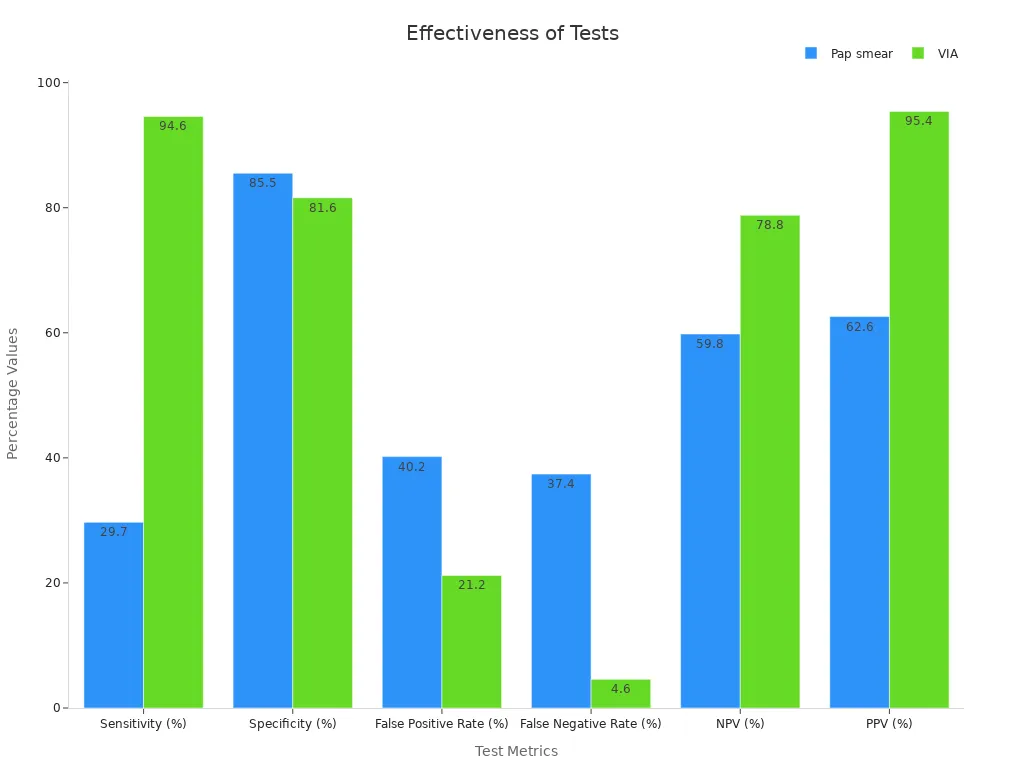
This table and chart show that acid-based visual inspection (VIA) detects more true positives but also produces more false positives than traditional methods.
Professional Help
Professional jewelers use advanced tools such as X-ray fluorescence (XRF) to analyze gold without damaging it. Certified experts from organizations like the International Society of Appraisers (ISA) and the American Society of Appraisers (ASA) conduct these tests. They provide detailed reports on gold purity, weight, and value. Their expertise ensures accurate results, especially for investment or insurance purposes.
Certified appraisals help buyers and sellers make informed decisions and avoid costly mistakes.
Visual Checks
Visual inspection offers a simple first step. People look for hallmarks, stamps, and signs of wear. However, visual tests can be unreliable. Studies show that visual inspection methods, like VIA, have high sensitivity but low specificity. This means they catch many real gold items but also misidentify some fakes. The accuracy of visual checks depends on the observer’s experience and the condition of the item.
For best results, combine visual checks with acid tests and professional evaluation. This approach increases confidence in gold authenticity.
Pure gold does not stick to magnets. Some gold jewelry may react to gold stick magnets because of alloy metals like nickel or iron. For accurate results, experts recommend using several tests together.
Multiple testing methods increase both sensitivity and specificity, improving accuracy.
Combining information from different sources reduces bias and enhances reliability.
Validation across different groups confirms the results.
People should consult a professional when testing valuable or questionable gold items.
FAQ
Does real gold ever stick to a magnet?
Real gold does not stick to a magnet. Pure gold is diamagnetic and will not attract or stick to even strong magnets. If a gold item reacts, it likely contains other metals.
Can gold-plated jewelry pass the magnet test?
Gold-plated jewelry may pass the magnet test if the base metal is non-magnetic. Some fakes use copper or brass, which do not react to magnets. Always use additional tests for confirmation.
Why do some gold chains stick to magnets?
Some gold chains contain nickel, iron, or cobalt in their alloy. These metals can cause a magnetic reaction. Clasps or fasteners may also include magnetic parts, leading to confusion during testing.
What type of magnet works best for testing gold?
A neodymium magnet works best for testing gold. This rare earth magnet provides a strong magnetic field, making it easier to detect even weak magnetic responses in gold alloys.